
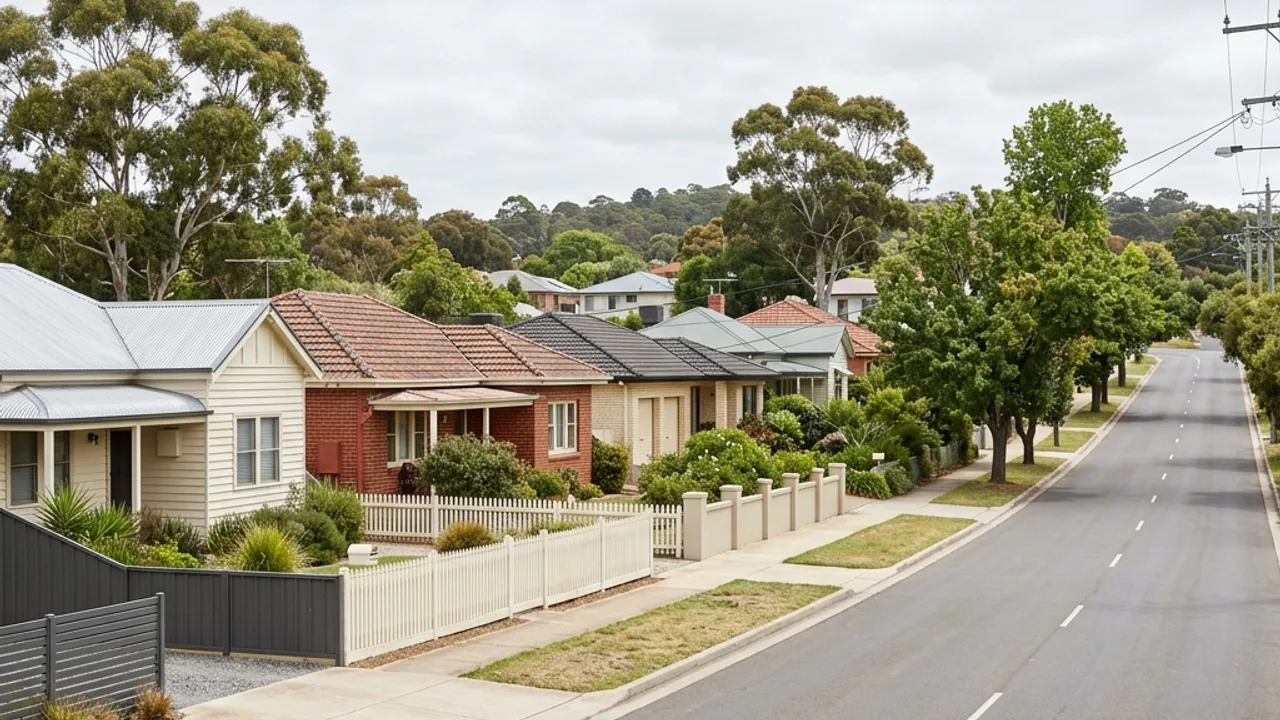
Westbrook postcode 4350, Toowoomba
Fencing in Westbrook
Rapidly growing satellite suburb south-west of Toowoomba, where brand-new estate homes on open former farmland need full-perimeter fencing from day one.
Three bare sides, a dog that keeps getting out, and a neighbour who has not moved in yet. That is the standard Westbrook fencing situation, and neither of its two hard parts is the fence itself: one is whether you can proceed with nobody next door to agree, and the other is wind, because there is nothing upwind of these blocks to slow it down.
Wind, open ground and a lapped and capped fence at Westbrook
Deal with the absent neighbour first, because people assume it blocks them and it usually does not. A fence built entirely inside your own boundary is your own work at your own cost, and nobody needs to agree to it. A fence on the boundary is a dividing fence, and the Queensland process runs on the registered owner of the adjoining lot whether or not anyone lives there. A vacant block still has an owner, a house under construction still has an owner, and a notice to contribute goes to that owner in the same way it would to a resident. What is different is the pace: a builder or an investor with no house on the block has less urgency about a fence than you do, so the realistic options are to proceed on your own side and share later, or to work through the notice process properly. Neither is a dead end.
The second consideration is what the wind does to a solid fence. Westbrook sits on open former farmland south-west of the city, and the Australian wind-classification standard accounts for terrain and shielding as well as region - which means a block with nothing upwind of it is a more demanding site than an identical block in a built-up street with houses on every side. A solid panel run, whether steel or lapped and capped timber, presents an unbroken face to that. The consequence is not that you cannot build one; it is that post size, post spacing and footing depth follow the manufacturer's wind tables for the actual site, and that assessment is done per block. Nobody can hand you a wind class for the suburb, and any fencer who quotes one off the top of their head is guessing.
That interacts with the ground, because Westbrook is out on the same reactive black soil as Glenvale. Higher wind load plus clay that swells and shrinks is the combination that puts a young fence out of plumb, so the footings are working against two things rather than one. On a bare block the practical answer is usually a full perimeter done in one pass with the footings specified for the site, rather than staging it and having to bring plant back. Gates get the heaviest treatment: an offset load on a moving post in reactive ground on an exposed block is the hardest single element on the job.
On the material side there is a real choice here. Lapped and capped timber - palings overlapped so there are no gaps, with a capping board along the top - gives full privacy and a substantial look and is popular on new estate homes, at the cost of a periodic sealing or oiling cycle. Steel panels remove that maintenance entirely and go up faster. Both are solid, so both carry the full wind load; neither is the low-wind option, because a fence with gaps in it is not what anyone on a bare block wants. And with no established fence to match into on any side, you have the unusual freedom of choosing the look from scratch rather than tying into something a previous owner picked.
Why Westbrook owners get a straight answer on the neighbour and the wind
An absent neighbour is not a dead end
A vacant or unbuilt block still has a registered owner, and the Queensland process works the same way. Whether to proceed on your own side or work through a notice gets explained plainly instead of leaving you waiting.
Exposure assessed for your block
Post size, spacing and footing depth for a solid run follow the manufacturer's wind tables for the actual site, because an unshielded block is a harder site than the same block in a built-up street. We do not quote a wind class off the cuff.
Footings for wind and clay together
Out here the footings are resisting a wind load and reactive black soil at once, and gate posts get the hardest version of both. They are specified for the combination rather than to a standard depth.
Fencing across Toowoomba and out to the Westbrook side of the Downs is what we focus on, with licensed operators handling regulated work.
About Westbrook
Westbrook is a rapidly growing satellite suburb south-west of Toowoomba, built out across open former farmland.
Westbrook Homestead recalls the area's pastoral origins, the Westbrook War Memorial marks the older village centre, Centenary Park serves as local open space and the Westbrook Skate Park draws the younger residents. Toowoomba Road connects it back toward the city, with Coupers Road, Ferguson Road and Michael Street serving the residential areas off it. The housing is overwhelmingly recent detached building on estate lots, with open cropping land still visible at the edges and remnant parcels awaiting development between built-out sections. Owners are predominantly first and second home buyers and young families, and because so much of the stock is brand new, the typical fencing job here is a first perimeter on an unfenced block rather than a replacement of anything.
What shapes a fence line in Westbrook
Exposure is what sets this suburb apart. A block on the edge of a developing estate has open farmland on one or more sides and no houses upwind, so a solid fence takes the full load with nothing breaking it up - a genuinely different site from an identical block surrounded by built houses. The second local condition is the state of the neighbours: on a partly built-out street, the block next door may be vacant, under construction or owned by someone who has never seen it, which changes the shared-cost conversation from a chat over the fence to a letter to a registered owner. Third, the ground is the same reactive black soil as the plains to the north, so footings are fighting both movement and wind. And with no existing fence anywhere on the block, the boundary has to be set out from the plan rather than followed.
Fencing services available in Westbrook
Pick the material or job type that matches what you are planning for a closer look at scope, decision points and compliance.
Talk to a fencing specialist
Fencing a new block at Westbrook?
Tell us how many sides are bare and whether the neighbouring blocks are built on yet, and we will help you work out what you can get moving now.
Tell us what is happening in Westbrook and we will help you take the next step.
Your details help us understand what you need and respond clearly.
Adjacent suburbs we also cover
Westbrook adjoins Glenvale to the north-east, with Drayton, Wyreema, Wellcamp and Finnie around its other sides. Glenvale is the neighbouring suburb with a detail page here, and it sits on the same black-soil plain.
Also adjoining Westbrook: Drayton, Wyreema, Wellcamp, Finnie.
Other Toowoomba suburbs
Fencing questions from Westbrook
The questions that come up most on Westbrook enquiries, answered as they apply in Queensland.