
Send the driveway
Opening width, gradient up or down from the street, what is inside the swing path, the existing fence material, and whether there is power at the gate.
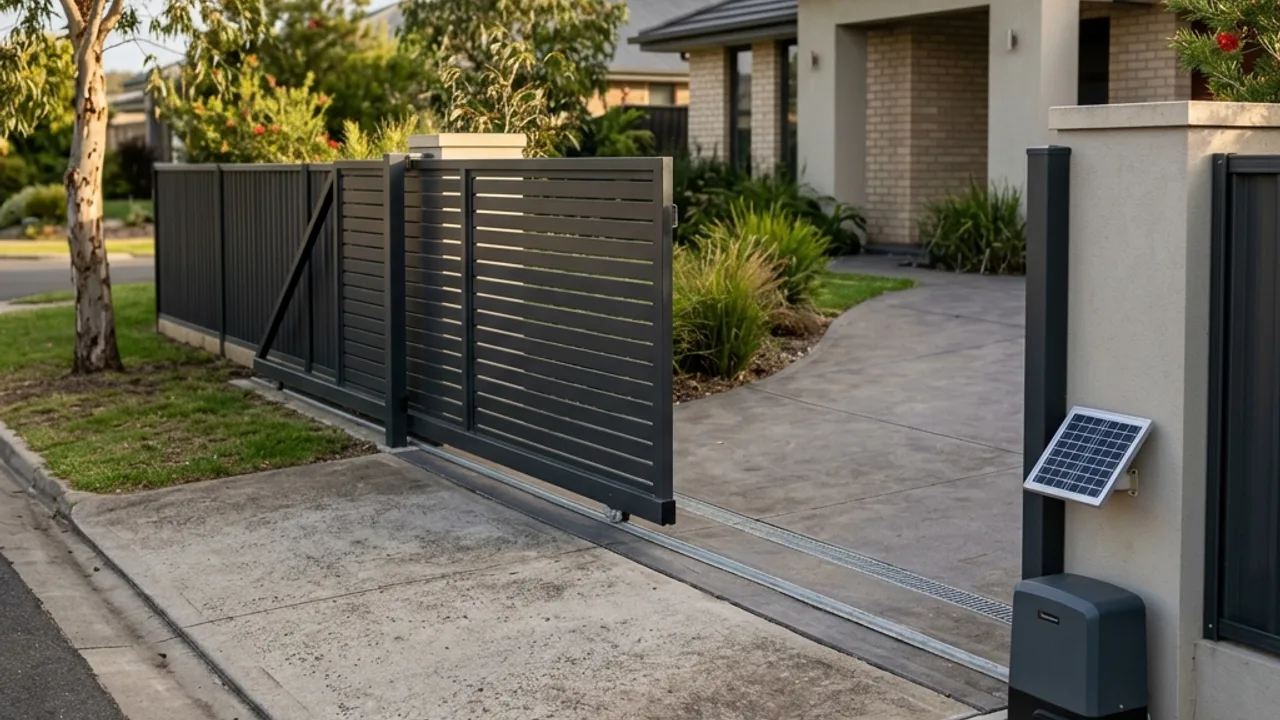
A gate is the highest-stress part of any fence line and the first to fail. Sliding or swing is a measurement, not a preference, and the post decides how long it lasts.
Two jobs bring people here and they are not the same. The first is a new driveway gate, usually automated, for kerb appeal, for keeping dogs and children off the road, or for keeping vehicles off the property. The second is a gate that has already failed: dragging on the driveway, out of plumb, no longer latching, or a motor that has given up straining against a leaf it was never sized for. The second reader is closer to buying and has a specific fault to describe. Either way the useful conversation starts with measurements, not catalogues. Send the driveway width, the gradient, what the existing fence is made of, whether there is power at the gate, and your suburb.
A leaf that runs alongside the fence line, which suits a narrow driveway, a rising gradient, or any entrance where a swing arc would foul a car or a bank.
Single or double swing leaves where there is room for the arc, plus pedestrian gates hung and latched to work with one hand and a bag of shopping.
Sliding and articulated arm motors run from mains power, or a solar and battery setup where there is no supply at the gate, which is common on acreage entrances.
Gate posts are sized and footed well beyond fence posts, because the leaf hangs off them all day and reactive soil moves them first. This decides longevity.
Photo-eye beams, obstruction sensing and force limits on any powered gate, plus a manual release so a power failure does not lock you in or out.
Remote, keypad, intercom, phone app or a hard-wired button, with a free-exit arrangement so leaving does not need a device in your hand.
Four measurements settle it. Driveway width, because a double swing needs each leaf to be manageable and a very wide opening pushes toward a slider. Gradient, because a swing leaf has to clear rising or falling ground through its whole arc and a driveway that climbs from the street often rules a swing out entirely. Arc space, meaning what is inside the swing path, since a parked car, a garden bed, a bank or a retaining wall all take the option away. And space alongside the opening, because a sliding gate needs somewhere to go, usually close to the full width of the opening again.
Once the type is settled, the leaf gets matched to the fence so the entrance reads as one thing. Colorbond sheet infill against a Colorbond run, timber against timber, aluminium slat against a slat frontage, tubular or wrought-style for a character home where a modern panel would look wrong. Colour is matched to the existing run rather than to a standard gate colour, which is a small detail that makes the difference between a gate that belongs and a gate that was added.
Then the part everybody skips. Gate posts carry the entire weight of the leaf and the swinging load it puts on them, and on Toowoomba's reactive black soil the gate post is reliably the first post on the property to go out of plumb, which is precisely why gates drag and stop latching after a couple of wet-dry cycles. Gate posts therefore go deeper and heavier than fence posts, with concrete to match, and the drop bolt or wheel arrangement is set so it still works when the ground has moved a little. Get the post right and everything else has a chance. Get it wrong and no motor will save it.
Automation multiplies whatever is already wrong. A motor pushing a gate against a sagging post, a driveway that has heaved, or a leaf heavier than the unit was specified for will bind, draw hard and eventually fail, and the motor gets blamed for a problem it inherited. So the sequence matters: get the post, the leaf weight and the running surface right, then automate. Where there is no mains supply at the gate, which is common on acreage entrances at Highfields, Cotswold Hills and Westbrook, a solar and battery setup is a genuine option rather than a compromise, sized against how many cycles a day the gate actually does.
Safety devices are not optional extras on a powered gate. Photo-eye beams across the opening, obstruction sensing that reverses the leaf, and force limits set correctly are what stand between a convenience and a hazard, because a powered gate closing on a car or a child is a serious matter. A manual release is the other essential: when the power goes out, you need to be able to move the gate by hand without tools and without a locksmith.
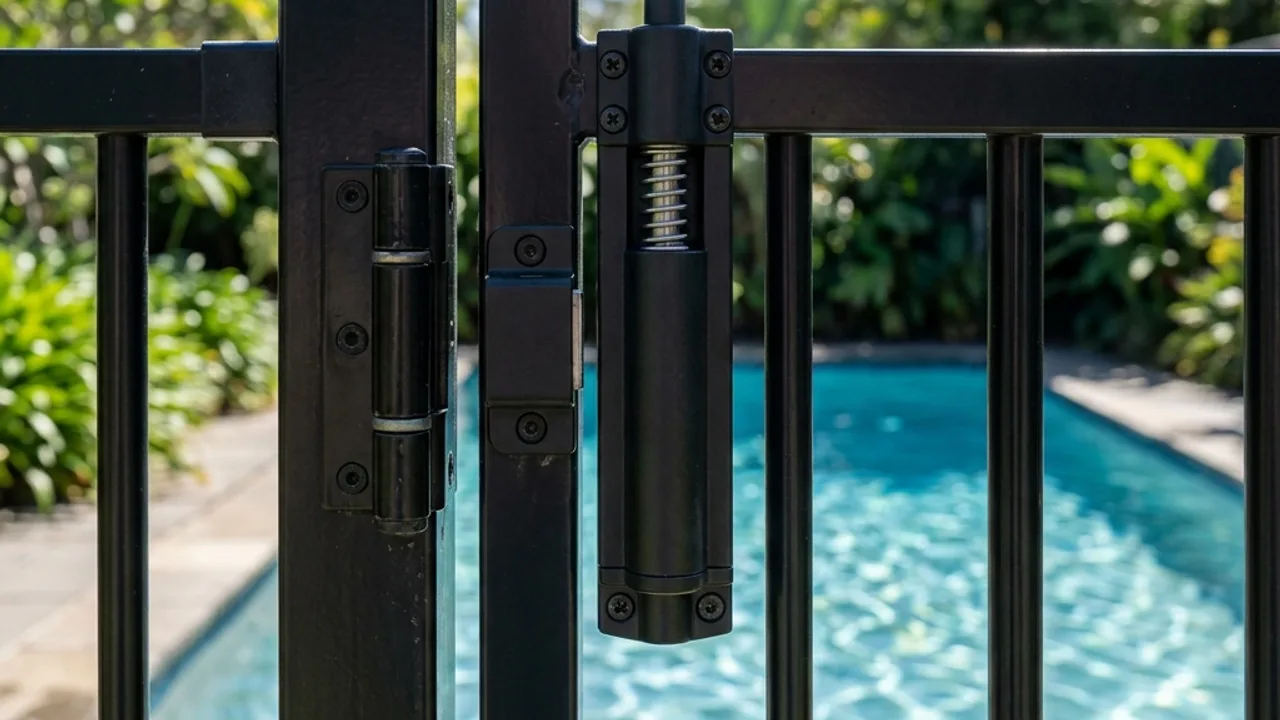
Height and position still apply to gates. The 2 m threshold that governs fences governs a gate leaf too, and on a corner block the sight-line truncation limits how tall anything can be near the intersection. One cross-reference worth naming: a gate forming part of a pool barrier is a different product under different rules, including self-closing operation and the latch release height, and that belongs on the pool fencing page.
Opening width, gradient up or down from the street, what is inside the swing path, the existing fence material, and whether there is power at the gate.
The opening and gradient are measured, the swing arc or slider run is checked against what is actually there, and leaf weight is worked out before any motor is chosen.
Leaf construction and infill, gate posts and footings, hardware, motor and power supply, safety devices and entry method itemised so you can see each decision.
Posts set and cured before the leaf is hung, gate aligned and latching, then the automation commissioned with safety devices tested and demonstrated.
Nearly every failed gate we are called about is a post problem wearing a hardware costume. Sizing and footing the gate post for reactive soil and the actual leaf weight is the first decision on the quote, not an afterthought at the bottom of it.
Slider or swing is settled by width, gradient, arc space and room alongside. If the driveway rules out what you had in mind, you get told at the measure with the reason, rather than sold the gate you asked for and left to find out.
Motor sized to the leaf, power supply confirmed or solar sized to the duty, safety beams and obstruction sensing included, manual release fitted and demonstrated. No motor reliability or cycle-life figures are quoted, because none can be verified here.
That is the gate post moving, and on reactive black soil it is the most predictable failure on a fence line. The answer is a heavier post, a deeper footing sized for the soil and the leaf, and hardware rated for the weight it is actually carrying.
Whichever the driveway allows. Width, gradient, what falls inside the swing arc and the room alongside the opening decide it between them, on site.
It is worth it if the gate is used daily and the leaf is properly built. A manual release lets you move the gate by hand when the power is out, and a solar and battery setup is available where there is no supply at the gate at all.
Infill and colour are matched to the run, whether that is Colorbond sheet, timber palings, aluminium slat or tubular steel. Older colours are not always still available, and you will be told before the gate is made.
Questions Toowoomba homeowners bring to this job, answered plainly.
Pick your suburb for the local block, soil and access notes, or send the form and we will come back with a written quote for gates & gate automation.
Talk to a Toowoomba fencing specialist
Adding a gate, or fixing one that has dropped?
Send the driveway width, the gradient, your fence material and whether power reaches the gate. You get a measured assessment and a written quote.