
Send the frontage
Approximate street boundary length, whether a driveway gate is included, the colours on the house, and a photo from the kerb so the proportions can be read.
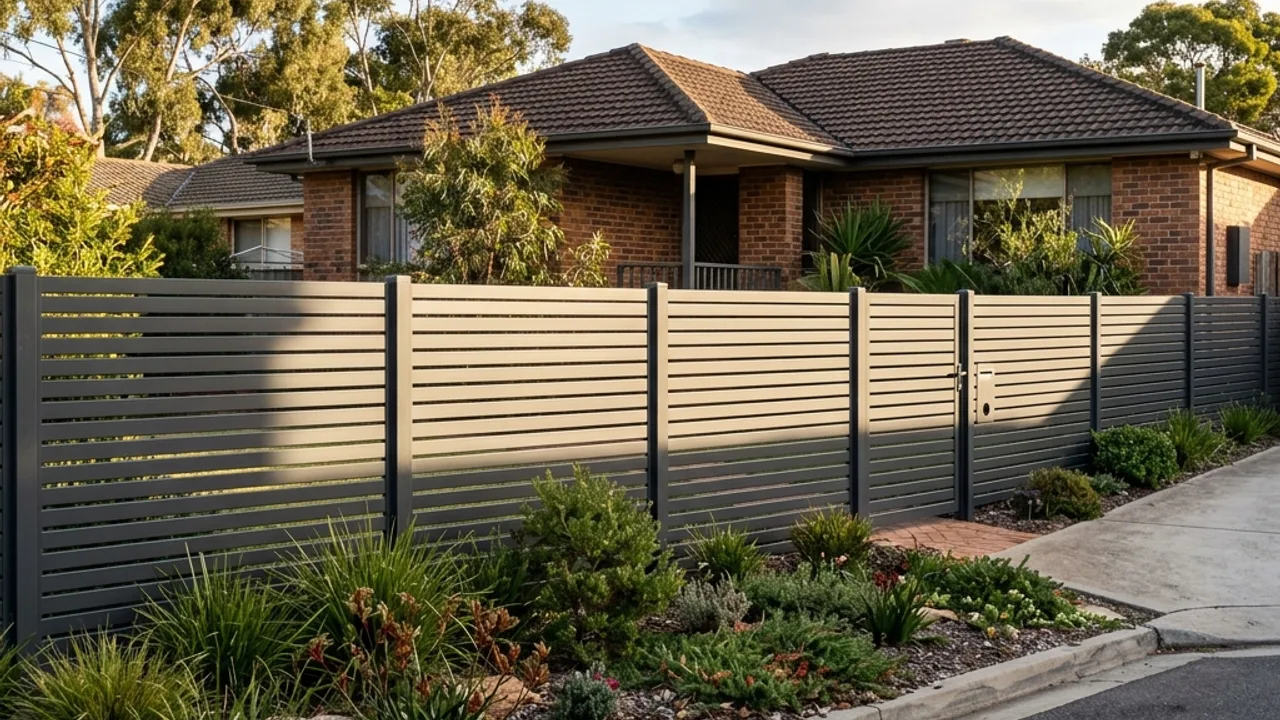
Horizontal powder-coated slats, a matching driveway gate and a feature panel at the letterbox. This is a street-frontage purchase, and it is a semi-privacy product by design.
Almost everyone reading this is finishing a new build or refreshing a frontage in Middle Ridge, Kearneys Spring, Highfields, Glenvale or Westbrook, and they want the street presence to look current. Aluminium slat delivers that better than anything else in the range: horizontal blades in a powder-coat that can be matched to the roof, the render or the garage door, with a sliding or swing gate built from the same profile. What it does not deliver is full privacy, because spaced slats are spaced. That single point is the most useful thing on this page and the reason people ring afterwards disappointed. Send the frontage length, whether a gate is in scope, the colour direction and your suburb.
Blade or box slats in an aluminium frame across the street boundary, with slat width and gap chosen for how much you want seen from the footpath.
Freestanding or wall-mounted screens over a courtyard, a deck edge or an air-conditioning unit, where a boundary fence is not the right tool.
A rendered or slat-clad letterbox surround and a feature panel beside the entry, treated as part of the frontage design rather than bolted on later.
A narrow gap reads almost solid from straight on and still opens up at an angle. The gap is chosen against the sightline you care about, not from a catalogue default.
Powder-coat samples held against the roof, the render and the garage door in daylight. Aluminium is low maintenance and does not rust, though it still wants an occasional wash.
Horizontal slats cannot rake with the ground, so a sloping frontage is built as stepped level bays. How those steps land is a design decision made before fabrication.
Spaced horizontal slats cut the view from the footpath as you walk past, because you are looking through the gaps at an oblique angle and the blades overlap in your line of sight. Stand square to the fence and look straight through and the gaps do exactly what gaps do. That geometry is why slats work beautifully on a frontage, where people move past, and disappoint on a rear boundary, where a neighbour stands still and looks across. If a back fence is the problem, a solid run is the answer and the privacy fencing page is the right starting point.
Gap width is the lever. Tighter gaps give more screening and also give the fence more surface for the wind to push against, which changes post spacing and frame specification, particularly on an exposed escarpment-edge block in Rangeville or Mount Lofty where wind classification runs higher than sheltered suburbia. Wide gaps are lighter, cheaper and more transparent. There is no correct answer, only a correct answer for the frontage in front of you, which is why the gap gets decided at the measure with the street in view.
Scale matters to the budget too. Slat is a frontage-scale purchase rather than a full-perimeter one. Most jobs are the street boundary plus a matching gate, with a solid Colorbond or timber run continuing down the sides and across the back where nobody sees it and privacy matters more. Buying it that way is how the look stays affordable.
Front fencing runs into rules that back fencing rarely does. In Queensland a fence up to 2 m above natural ground is generally accepted development, and above that you need approval from a building certifier. On a corner block there is a second constraint: the siting code requires sight lines at the intersection, so fencing inside the truncation is kept to roughly a metre so drivers can see across the corner. Plenty of slat designs get drawn at a height the block will not carry, and finding that out early is cheaper than finding it out late.
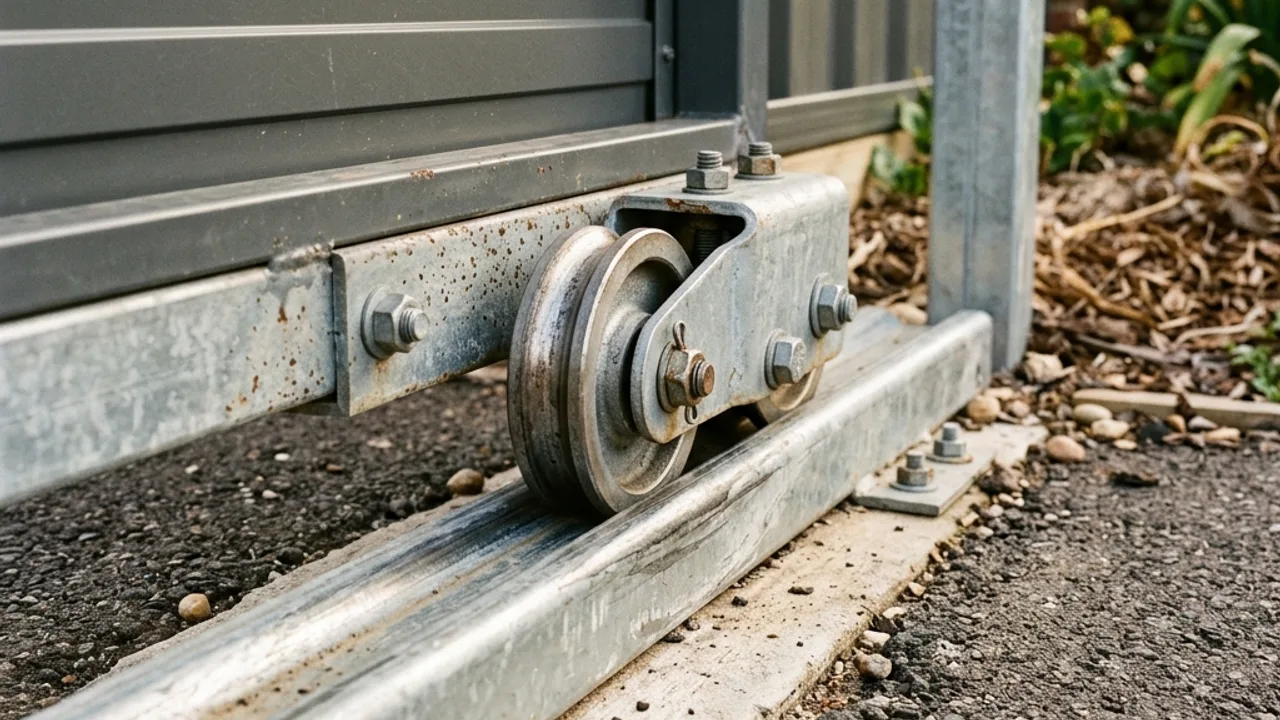
The gate is not an afterthought on a slat frontage, it is half the design. Slat infill on a sliding or swing leaf in the same profile and colour is what makes the frontage read as one thing rather than a fence with a gate next to it. Whether the driveway suits a slider or a swing comes down to width, gradient and the space available alongside, and if automation is in scope the motor, the power supply and the safety devices belong in the same conversation. The gates and gate automation page goes into that properly.
Finish is the last decision and it lasts the longest. Powder-coated aluminium holds colour well and will not rust, which is why it suits a fence that is looked at every day from the kerb. It is low maintenance, not zero maintenance, and how long a powder-coat holds up depends on your block, its aspect and how much salt or dust it sees.
Approximate street boundary length, whether a driveway gate is included, the colours on the house, and a photo from the kerb so the proportions can be read.
The fall across the frontage is measured so stepping can be planned, and corner sight lines and the height limit are checked against the block before design.
Slat profile, gap, panel bay layout, colour, gate type and any letterbox or feature panel priced as one frontage, with the gate itemised separately.
Panels made to the measured bays, posts footed for the block's exposure, gate hung and aligned, and automation commissioned where it is part of the job.
You will be told plainly where a spaced slat fence gives you what you want and where it does not, including being pointed at a different material when a rear boundary is the real problem. A frontage you love and a back yard you feel exposed in is not a good outcome.
Fence, gate, letterbox surround and feature panel are set out together so slat directions line up, bay widths relate to the driveway and the colour reads consistently across the whole street elevation.
Slat coverage is wind surface. Frame specification and post spacing are set from the block's exposure, which on a ridge or escarpment-edge site in Rangeville or Mount Lofty is a materially different calculation to a sheltered estate street.
Semi-privacy, and only from certain angles. They screen a passing view along the footpath well and a static view straight through much less. For a rear boundary or an overlooked deck, a solid fence or a purpose-built screen is the honest recommendation.
It is, if you fence the whole block in it. The sensible way to buy slat is the street frontage and the gate, with solid fencing continuing down the sides and across the rear. That keeps the look where it is seen and the budget where it belongs.
Powder-coated aluminium holds colour well and does not rust, which is the main reason it suits a fence on constant display. It is low maintenance rather than zero maintenance, so ask the supplier for the coating warranty that applies to the profile you choose.
Questions Toowoomba homeowners bring to this job, answered plainly.
Pick your suburb for the local block, soil and access notes, or send the form and we will come back with a written quote for aluminium slat fencing.
Talk to a Toowoomba fencing specialist
Designing a slat frontage in Toowoomba?
Send the frontage length, whether a gate is in scope and the colours on the house. You get a measured design and a written quote covering fence, gate and feature panels.