
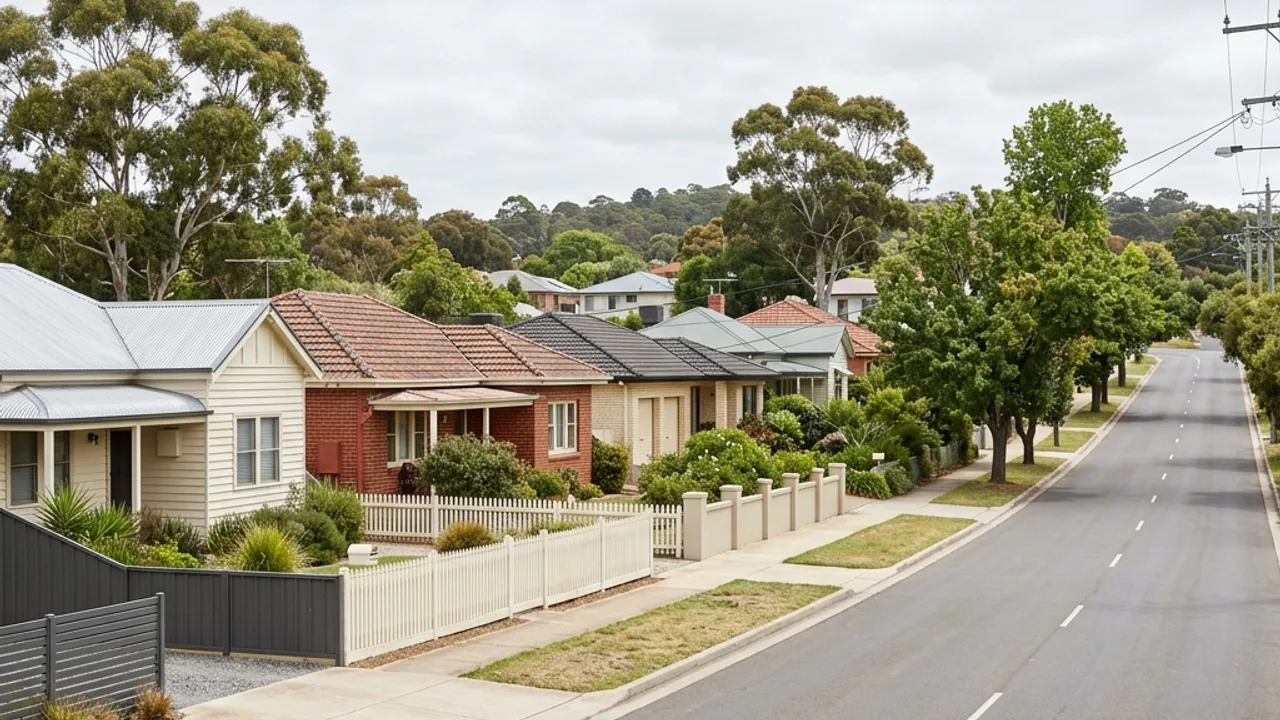
Glenvale postcode 4350, Toowoomba
Fencing in Glenvale
Fast-growing western suburb that has shifted from farmland to new estates since the early 1990s, with fresh subdivisions needing first-time boundary and estate fencing.
The ground out here moves. Glenvale sits on the Darling Downs black soil, a reactive clay that swells when it is wet and shrinks when it dries, and over a few seasons that is enough to lean a post and stop a gate latching. If your fence has gone out of plumb or you are fencing a new estate block for the first time, this is the part of the job that decides whether it stays straight.
Black soil, gates and the fencing Toowoomba's western estates need
The soil first, because it explains everything else. CSIRO mapping of the Toowoomba area records the black earths across the plains west of the range, and they are highly reactive: volume changes with moisture content, so the ground physically lifts in a wet season and drops back in a dry one. A fence post set in that is not sitting in a stable socket. Over repeated wet-dry cycles a post can heave, tilt slightly, and never come all the way back, and a run that was dead straight when it went in develops a wave. This is not a workmanship failure and it is not avoidable by wishing; it is managed with footing depth, concrete quality, and the way the post and the concrete interact with the surrounding clay. Which is exactly why a fencer who has only worked on the range side prices this ground wrong.
Gates go first, every time, and it is worth knowing why. A gate post carries an eccentric load: the whole weight of the leaf hanging off one side, plus the shock of it being closed, plus wind. That is a far harder job than a line post which is only holding panels. So when the clay moves, the gate post is the one that tilts, and the symptom you notice is a gate that scrapes the ground, will not latch, or has developed a gap at the top. On a new build the answer is a heavier gate post set deeper than the line posts, sometimes braced; on an existing fence, resetting the gate post properly is usually a better spend than adjusting hinges for the third time.
For a new estate block the job is a first perimeter rather than a replacement, and that changes the scope. There is no old fence to remove, which takes a cost out, but there is also nothing to follow, so the boundary has to be established from the plan or the pegs before set-out. Three sides may all be new, and each shared side is a dividing fence with a neighbour who may be a builder, a developer or an owner still to move in - the Queensland cost-sharing process runs on the registered owner either way. Fencing the whole perimeter in one pass usually costs less per metre than doing it in stages, and on a bare block there is a genuine argument for doing it early, because the yard is unusable and unsecured until it is done.
One local timing note rather than a specification one: Toowoomba gets genuinely cold, frosty mornings in winter, unusual for Queensland, and cold slows a concrete cure. Post concrete needs to set before panels load it, commonly a day or two, and in cold weather that stretches. It is not a structural problem, it just means a winter job may sit for an extra day between set-out and completion. Anyone who tells you the whole run goes in and finishes in one visit regardless of the weather is describing a sales process, not a build.
Why Glenvale homeowners get footings specified for the ground they actually have
Footings set for reactive clay
Depth and concrete are specified for black soil rather than to a generic number, because a post that suits the range side of the city will not hold a straight line out here through a few wet and dry seasons.
Gate posts treated as their own problem
The gate post carries an offset load and is the first thing this ground pushes out of plumb. It gets sized, set deeper and braced where needed instead of being the same post as the rest of the line.
Bare blocks quoted as a full perimeter
On a new estate block there is no old fence to follow and no old fence to remove. The boundary gets confirmed before set-out, and doing all sides in one pass is priced against staging it so you can compare properly.
Fencing across Toowoomba and the western Downs is our focus, and where a job needs a licensed operator, one is engaged for it.
About Glenvale
Glenvale has changed character faster than almost anywhere else in Toowoomba, shifting from farmland to residential estates from the early 1990s onward.
The Toowoomba Showgrounds and the Clive Berghofer Events Centre both sit inside the suburb and bring substantial event traffic through it, while Glenvale State School and Darling Downs Christian School serve the resident families. Glenvale Road runs through as the main spine, with McDougall Street and Boundary Street marking its edges. The housing is predominantly newer detached homes on estate-sized lots, punctuated by remnant larger parcels that have not been subdivided yet. Owners here skew toward younger families and first or second home buyers, and because so much of the stock is recent, a large share of the fencing work is a first perimeter on a bare block rather than the replacement of something worn out.
What shapes a fence line in Glenvale
Everything here comes back to the soil. This is the western plains black earth, a reactive clay that changes volume with moisture, and it does two things to fencing: it makes post footings the most important decision on the job, and it makes gates the first component to fail. Digging in it is easy, which is a genuine cost advantage over the rocky basalt ground on the range side, so post holes are quick and machine access on estate blocks is generally good. The second local factor is that so many blocks start with no fence at all, meaning the boundary is established from paperwork rather than followed, and three sides may need doing at once. Event traffic from the showgrounds also makes street frontages on the main roads a screening decision rather than a decorative one.
Fencing services available in Glenvale
Pick the material or job type that matches what you are planning for a closer look at scope, decision points and compliance.
Get help with your Glenvale project
Fencing a Glenvale block on black soil?
Tell us whether it is a bare block or an existing fence that has moved, and whether a gate is involved, and we will help you work out what the footings need to do.
Tell us what is happening in Glenvale and we will help you take the next step.
Your details help us understand what you need and respond clearly.
Adjacent suburbs we also cover
Glenvale adjoins Wilsonton to the north, Newtown to the east, Harristown to the south-east, Westbrook to the south-west and Torrington to the north-west. Westbrook sits further out on the same black-soil plain, so the footing considerations carry straight across that boundary.
Also adjoining Glenvale: Torrington.
Other Toowoomba suburbs
Fencing questions from Glenvale
The questions that come up most on Glenvale enquiries, answered as they apply in Queensland.