
Send the site detail
Site address, approximate perimeter length, gate openings and widths, what access control is needed and who needs access, plus what triggered the project.
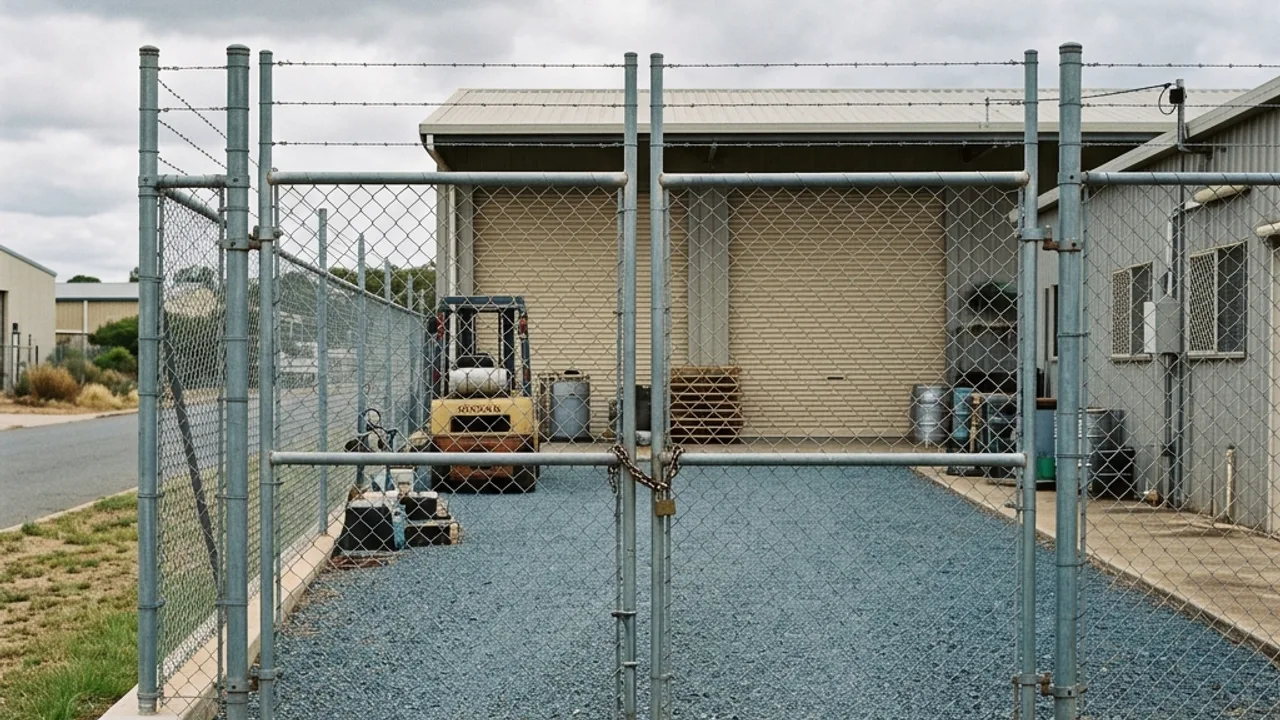
Perimeters for yards, compounds, schools and body corporate boundaries. Specified around the actual risk and the way perimeters get defeated, not around how a fence looks in a brochure.
Security fencing is usually scoped by an organisation rather than a homeowner. A yard around Bridge Street, Tor Street or McDougall Street in Wilsonton needs its compound secured after a break-in. A school needs a perimeter that keeps students in and after-hours visitors out. A body corporate needs a boundary that survives tenants, trolleys and delivery vans. There is usually an incident or an audit behind the enquiry, a budget process behind the decision, and someone who has to be convinced with a comparable quote. That shapes the specification decisions below, and it is why a commercial perimeter cannot be priced without site detail.
Cost-effective coverage over long perimeters, with mesh gauge and aperture chosen for the risk and top and bottom tension wires so the mesh cannot be lifted.
Rigid welded steel where the boundary faces a street and has to look like part of the premises, not like temporary fencing left behind.
Sliding gates for wide vehicle openings, swing gates for pedestrian access, and hardware, locking and keying graded to match the fence rather than undercut it.
Anything above 2 m from natural ground is building work requiring a certifier, and commercial perimeters routinely exceed that, so approval is scoped rather than discovered.
Barbed or razor topping suits some industrial compounds and has no place on a school, childcare or residential-adjacent perimeter. Site type decides it, not the catalogue.
Privacy slats or shade cloth turn an open mesh fence into a solid surface, which changes the wind load completely. Posts and footings have to be specified for the finished fence.
The usual answer is both, split by aspect. Chain wire covers the sides and rear efficiently, where nobody is looking and metres matter more than appearance, and tubular steel goes across the street frontage where the boundary is part of how the business presents. That split is normal, defensible in a budget submission, and considerably cheaper than steel all the way around. Where chain wire faces a street and appearance is a live concern, powder-coated mesh and a proper top rail change how it reads for a fraction of the cost of a steel upgrade.
Specification is where perimeters are won or lost. Mesh gauge and aperture set how hard the fabric is to cut or climb. Top and bottom tension wires stop mesh being lifted at the bottom, which is how most chain wire perimeters are actually defeated, and a bottom rail or ground fixing does it more thoroughly again. Post spacing and footing depth carry both the fence and whatever gets leaned on it. On tubular steel, panel rigidity and the picket spacing determine whether a boundary reads as decorative or as a genuine barrier.
The gate is the weak point on almost every perimeter and it deserves the attention accordingly. Hardware graded below the fence, a slider that can be jemmied off its track, an unprotected gate post that a vehicle can push through, or an access system whose codes have not changed since installation will each undo a good fence. Sliding gates suit wide vehicle openings, swing gates suit pedestrian access, and access control by keypad, intercom, card or remote has to suit how many people come and go and how often that changes.
Two regulatory points affect nearly every commercial job here. First, height: a fence over 2 m above natural ground is building work in Queensland and needs approval from a building certifier, and commercial perimeters are frequently taller than that, so the approval pathway belongs in the scope and the programme from the start. Second, licensing: a metal fence with concrete footings valued at $3,300 or more requires a QBCC-licensed contractor, and a commercial perimeter is almost always far above that threshold. Licensed operators do that work, and any tender you receive should make that clear.
Comparability is the other thing a scoping manager needs and rarely gets. A quote you can defend internally itemises metres of each fence type, heights, mesh specification, gates by size and type, hardware and access control, footings, removal and disposal of the existing fence, and whether certifier approval is included or excluded. When two quotes are structured that way the comparison is real. When one is a single figure, it is not a comparison at all.
Operational continuity usually decides sequencing. Very few sites can close a yard for a week, so perimeters are commonly staged one boundary at a time, with temporary make-safe where a section has to come down before its replacement goes up, and gate changeovers timed around delivery and access patterns rather than around what is convenient for the install. That is a planning conversation held before the quote, because it changes the price.
Site address, approximate perimeter length, gate openings and widths, what access control is needed and who needs access, plus what triggered the project.
Boundary lengths measured, existing fencing assessed, climbable structures and blind spots noted, gate positions checked against vehicle movements on site.
Each fence type by metre and height, gates by size and type, hardware and access control, footings, removal, and approval scope stated as included or excluded.
Boundaries done in an agreed order so the site keeps operating, with temporary make-safe where needed and gates changed over at a time that suits your access.
Scope is itemised line by line because somebody in your organisation has to justify the spend against another submission. A single lump-sum figure is easy to write and impossible to defend, so that is not what you get.
A perimeter deters and delays. It is not impenetrable, nothing claimed here is unclimbable, and no insurer approval is asserted. What a properly specified fence does is remove the easy options, and that is a claim that survives scrutiny.
A school perimeter and an industrial compound are different problems with different acceptable answers, particularly on topping and gate hardware. The recommendation follows the site type and duty of care rather than defaulting to the most aggressive option available.
So put tubular steel on the frontage and chain wire down the sides and across the rear. It is a normal split, it presents properly from the street, and it puts the budget into the boundary people actually see.
Insist every quote itemises metres by fence type and height, mesh specification, gates by size and type, hardware and access control, footings, removal of the old fence, and whether certifier approval is in or out. Structured that way, the numbers become comparable.
It deters and it delays, and a well-specified perimeter removes the quick and quiet options. Anything stronger than that would be a claim nobody can stand behind, so it is not made here.
Perimeters are staged one boundary at a time, with temporary make-safe where a section has to come down first, and gate changeovers scheduled around your access. Say how the site operates and the programme is built around it.
Questions Toowoomba homeowners bring to this job, answered plainly.
Pick your suburb for the local block, soil and access notes, or send the form and we will come back with a written quote for security & commercial fencing.
Talk to a Toowoomba fencing specialist
Scoping a perimeter for a Toowoomba site?
Send the site address, perimeter length, gate openings and access requirements. You get a site walk and an itemised written quote your organisation can compare properly.