
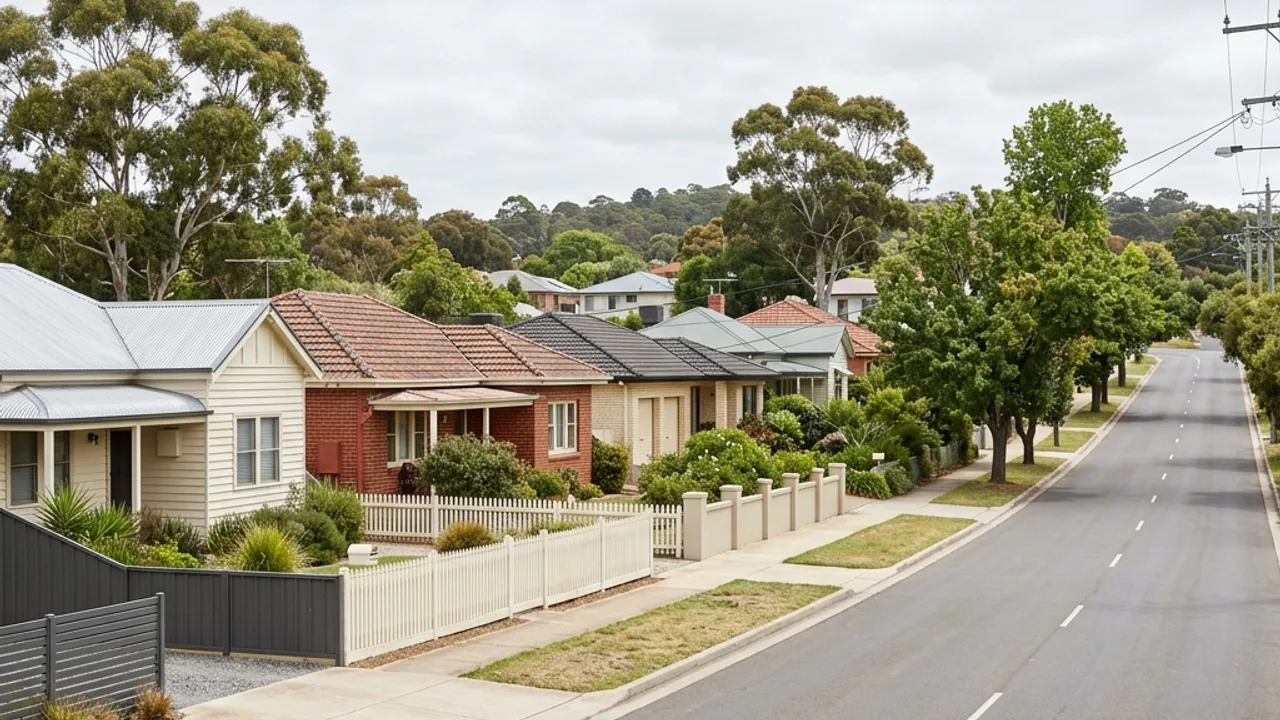
Cotswold Hills postcode 4350, Toowoomba
Fencing in Cotswold Hills
Suburb of homes on larger blocks north-west of the city, where long boundary runs, exposed frontages and driveway gates set the brief.
On a larger block the price of a fence is mostly arithmetic. Cotswold Hills sits north-west of the city where boundaries run a long way, so metres of fence, the number of corners and how easily a machine can get along the line matter more than the colour. Ground conditions shift across a single block here as well, and a frontage facing the highway asks for something different again from the side boundaries.
Long boundary runs and privacy screening at Cotswold Hills
On a long run the rate per metre is the number that decides the job, and the biggest lever on it is access. Where a machine can travel the whole line, materials can be dropped beside where they are needed and holes can be bored one after another, that rate falls well below a tight suburban job where everything is carried through a side gate. This is the quiet advantage of a block out here, and it is worth protecting when you plan the work: clearing a working width along the line before the crew arrives, and leaving room for a vehicle at both ends, does more for the final number than haggling over the panel price. Corners and direction changes work the other way, because each one is a set-up in its own right, so a boundary with five kinks in it costs more than the same metres in a straight line.
The ground is not the same across a block this size, and that matters far more than it does on a suburban lot. The lower country toward Gowrie Creek holds moisture and stays soft long after the higher ground has dried out, while the rise behind it can be firm and rocky in the same week. Reactive clay swells when it is wet and shrinks back when it dries, and a post that is not down far enough simply rides that movement until the line is out of plumb. So post depth is set for the conditions along each part of the run rather than to one number for the whole boundary, and the low sections generally take deeper holes and more concrete than the top of the block. A fence that looks fine through its first winter and leans in its second is nearly always a footing specified for the easy end of the property.
A frontage facing the Warrego Highway is a different brief from the side boundaries. What owners usually want there is to stop seeing the traffic and to take some of the sound out of the yard, and those two things are related but not the same. A solid fence with no gaps blocks the sightline immediately, and privacy screening added above it can lift the effective height where the ground falls away. Sound is harder and worth being honest about: what reduces road noise is mass and the absence of gaps, so a solid run with the bottom closed off does better than one with daylight underneath it, but no domestic fence removes highway noise, it softens it. Height helps, distance helps more, and planting behind the fence does more for how the noise feels than for what a meter would read.
Entrances then get treated as their own item. Driveways off Holmes Road, Hamzah Drive, Boundary Street and Gowrie Junction Road are typically set well back from the road, and a gate at the front of a long boundary is both the security point and the thing visitors judge the property by, so it is specified separately from the run: the span, whether it slides or swings, the fall across the opening, and how it gets power if it is to be automated. On the compliance side the position in Queensland is straightforward for residential work of this kind. A contractor needs a QBCC licence for residential fencing work valued at $3,300 or more including labour and materials, and on a boundary of any real length you are past that threshold long before the quote is finished. Ask for the licence number and check it before the deposit, not after.
Why Cotswold Hills owners get the whole line walked first
Access planned before the rate is quoted
Whether a machine can travel the line, where materials can be dropped and how many corners break the run are what set the price per metre. They get worked out on the block, because that is where the money on a long boundary is won or lost.
Post depth set for the ground it goes into
The low country near Gowrie Creek holds moisture long after the rise has dried, so footings are specified along the run rather than to one depth for the whole boundary. That is what keeps a long line plumb through its second summer.
The highway frontage specified for what it is
A boundary facing the Warrego Highway is about screening, durability and taking the edge off the noise. What a solid run with the bottom closed off will and will not do is explained plainly instead of being oversold.
We focus on fencing across Toowoomba and the surrounding district, and licensed operators take on the work Queensland requires a licence for.
About Cotswold Hills
Cotswold Hills sits immediately north-west of Toowoomba, made up largely of homes on larger blocks rather than compact suburban lots.
John Trousdell Park is the locality's named open space, Gowrie Creek runs through the area and shapes the low ground, and the Warrego Highway forms a frontage along part of it, with the Toowoomba City Aerodrome sitting immediately beyond the southern edge. Holmes Road, Hamzah Drive, Boundary Street and Gowrie Junction Road serve the blocks off the main routes. Houses here generally sit on larger blocks with room around them, sheds are common, and there is usually space to bring a vehicle right up to a boundary, which changes what is practical on a fencing job. Owners tend to be settled and hands-on, handling their own small repairs between larger jobs, so the enquiries that do come in are usually about work that genuinely needs equipment or a full run replaced rather than a Saturday morning of tightening.
What shapes a fence line in Cotswold Hills
Run length is the defining condition and it changes the arithmetic completely. A single boundary here can be longer than every fence on a suburban block put together, so the price is dominated by metres and by how many corners break the line rather than by set-up. Machine access along the line is generally unrestricted, which keeps the rate per metre down. Working against that, the ground varies across one property: the low country near Gowrie Creek holds moisture and stays soft well after the higher ground has dried, so footings behave differently at the bottom of a block than at the top, and a run crossing both has to account for it. The Warrego Highway frontage adds one more consideration, since a boundary facing a highway is about screening, durability and noise rather than looking pretty from the street.
Fencing services available in Cotswold Hills
Pick the material or job type that matches what you are planning for a closer look at scope, decision points and compliance.
Get help with your Cotswold Hills project
Fencing a long boundary at Cotswold Hills?
Tell us roughly how many metres are involved, how many corners there are and whether the highway frontage is part of it, and we will help you work out what is realistic.
Tell us what is happening in Cotswold Hills and we will help you take the next step.
Your details help us understand what you need and respond clearly.
Adjacent suburbs we also cover
Cotswold Hills sits alongside Gowrie Junction, Cranley, Charlton and Torrington, with Wilsonton the nearest suburb that has its own detail page here. Wilsonton is where the larger blocks give way to the mixed residential and industrial edge of the city.
Also adjoining Cotswold Hills: Gowrie Junction, Cranley, Charlton, Torrington.
Other Toowoomba suburbs
Fencing questions from Cotswold Hills
The questions that come up most on Cotswold Hills enquiries, answered as they apply in Queensland.