
Pick the system
Privacy panel, picket or rail style, plus run length, your suburb and what the fence has to do. Photos of the boundary and the ground help.
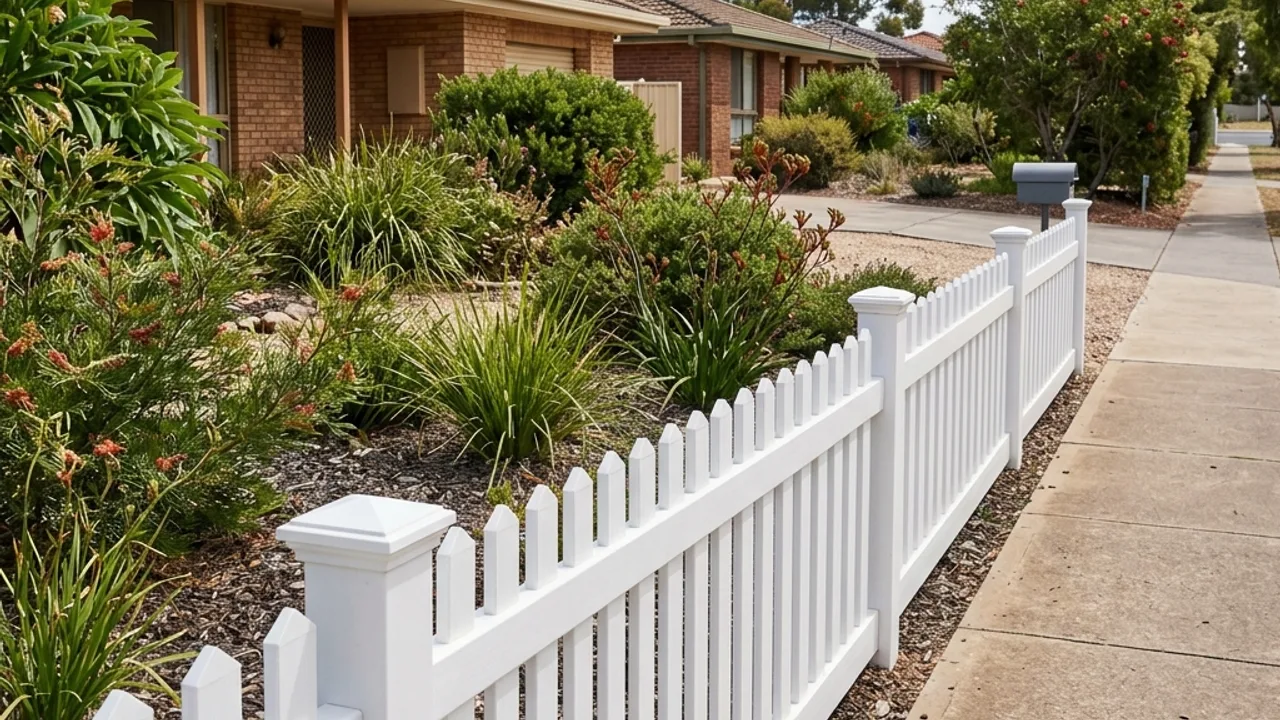
Rigid vinyl panels and pickets that never need painting and cannot rot. This page covers what that promise actually includes, and where PVC is the wrong answer.
PVC draws more searching in Toowoomba than any other fence type on this site, and the reason is simple: most people have never owned one and want to know whether it is any good. Two readers dominate. The first is tired of re-oiling or repainting timber and wants that cycle gone. The second wants a front picket or rail fence that stays white on a newer block out at Westbrook, Cotswold Hills, Glenvale or Highfields. PVC fencing here means rigid vinyl panels and pickets, which is a structural product rather than the flexible plastic people picture. Send the system you are leaning toward, the run length and your suburb, and the first step is a measure that reads the fall and the ground before anything is priced.
Solid tongue-and-groove vinyl panels between posts for a boundary run, blocking sightlines completely and reading like painted timber from a few metres away.
Spaced vinyl pickets on a front boundary where the look is the point and screening is not. Stays white without a paintbrush ever coming near it.
Two or three-rail vinyl fencing for a front boundary or driveway entrance, giving the look of painted timber without the repainting.
Steel or aluminium stiffeners inside rails and posts on longer runs and exposed blocks, which is what keeps a rail from bowing over a wide bay.
A rigid panel system tolerates a post moving out of plumb far less gracefully than a paling fence does, so footing depth and concrete quality are set for the soil on the block.
Vinyl moves with heat, so bays are set out with expansion allowance and a deliberate ground clearance rather than being pushed tight and hoping.
Start with the genuine wins, because they are the reason PVC exists. There is no painting, oiling or sealing cycle, ever. There is no rot, because there is no timber at the ground line to rot. There are no termites, for the same reason. On a boundary you would otherwise be re-coating every few years, that is a real saving of both money and Saturdays, and it is why the never-paint pitch converts.
Now the limits, stated plainly, because buying PVC on the never-paint promise and being unhappy about something else is the failure mode this page exists to prevent. Colour choice is narrow and dominated by white and light tones, so if you wanted a dark boundary fence this is not the material. Panel systems handle a sloping site less gracefully than palings, which can be raked or stepped in small increments. Impact resistance is lower than steel, so a driveway edge or a spot where a trailer gets reversed is worth thinking about. And a solid privacy panel is a solid surface, which means it carries the full wind load on an exposed block.
On price, resist the urge to compare upfront figures alone. PVC is not automatically cheaper than timber to buy, and the case for it is made across the life of the fence, where the repainting and the rot repairs never arrive. Whether that maths works for you depends on how long you intend to own the place, which is a question worth answering before the quote rather than after.
If the run is a boundary fence shared with a neighbour, settle the material and the standard in writing before you order anything. Queensland's dividing fence law expects adjoining owners to contribute equally toward a sufficient fence, which for residential land means 0.5 m to 1.8 m of the materials the Act lists, and that list ends with a catch-all covering other material a dividing fence is ordinarily built from. Where one owner wants more than sufficient, that owner covers the difference. The practical upshot is the same either way: agreement first, in writing, with the quote attached, then order.
The ground matters more to PVC than to most materials. West of the range the Darling Downs black soil is highly reactive clay that swells when wet and shrinks when dry, and it lifts and leans fence posts across those cycles. A paling fence absorbs a bit of that; a rigid panel system telegraphs it, because the panels are square and the eye reads any lean immediately. Footings therefore go deeper, the concrete matters, and post spacing is set with movement in mind rather than to the minimum the brochure allows.
Heat and frost are the other local detail. Toowoomba sits near 700 m on the crest of the range, which gives it genuinely cold, frosty winter mornings alongside hot summer afternoons. Vinyl expands and contracts through that range, so expansion allowance in each bay is a real specification item, and winter concrete curing takes longer than most people expect before panels can go up.
Privacy panel, picket or rail style, plus run length, your suburb and what the fence has to do. Photos of the boundary and the ground help.
Panel systems need level bays, so the fall is measured to plan stepping, and the soil at post positions is assessed because footings follow the ground, not a standard depth.
System type, colour, panel heights, bay layout, internal reinforcement, gates and removal of the old fence all itemised rather than bundled into one figure.
Posts set plumb and left to cure properly, which takes longer in a Toowoomba winter, then rails and panels fitted with expansion allowance and the ground clearance set.
Never needs painting is true. It does not mean unlimited colours, it does not mean steel-grade impact resistance, and it does not mean a panel system loves a steep block. Hearing all of that before you order is the difference between a good purchase and a regret.
Vinyl panels want level bays, so the step pattern across a sloping run is designed at the measure and shown to you, instead of being improvised on site once the material has already been cut.
Long bays and exposed frontages get internal stiffeners in rails and posts. That is a specification decision made against the run length and the block's wind exposure, and it appears on the quote where you can see it.
Rigid vinyl fencing is a UV-stabilised formulation made for outdoor structural use, not the flexible plastic most people picture. No specific year figure for colour hold is quoted here because none can be verified for this build. What is fair to say is that the colour range is narrow.
That is what internal reinforcement in the rails and posts, sensible bay widths and post spacing set to the block's exposure are for. A solid privacy panel catches the full wind, so an exposed frontage gets specified differently to a sheltered side boundary.
Not necessarily upfront. The case is made over the life of the fence, where there is no repainting, no oiling and no ground-line rot to repair. How well that works for you depends on how long you plan to own the property.
Cost sharing on a dividing fence is measured against a sufficient fence, and anything beyond that standard is on the owner who wants it. Rather than assuming either way, agree the material, the height and the cost split with your neighbour in writing, with the quote attached, before ordering.
Questions Toowoomba homeowners bring to this job, answered plainly.
Pick your suburb for the local block, soil and access notes, or send the form and we will come back with a written quote for pvc fencing.
Talk to a Toowoomba fencing specialist
Weighing up PVC for your boundary?
Send the system you are leaning toward, the run length and your suburb. You get a measured site visit and a written quote that names the reinforcement and the bay layout.