
Send the fence line
Run length in metres, your suburb, the height you have in mind, and whether a neighbour shares the boundary. A photo of the existing fence tells us more than a paragraph.
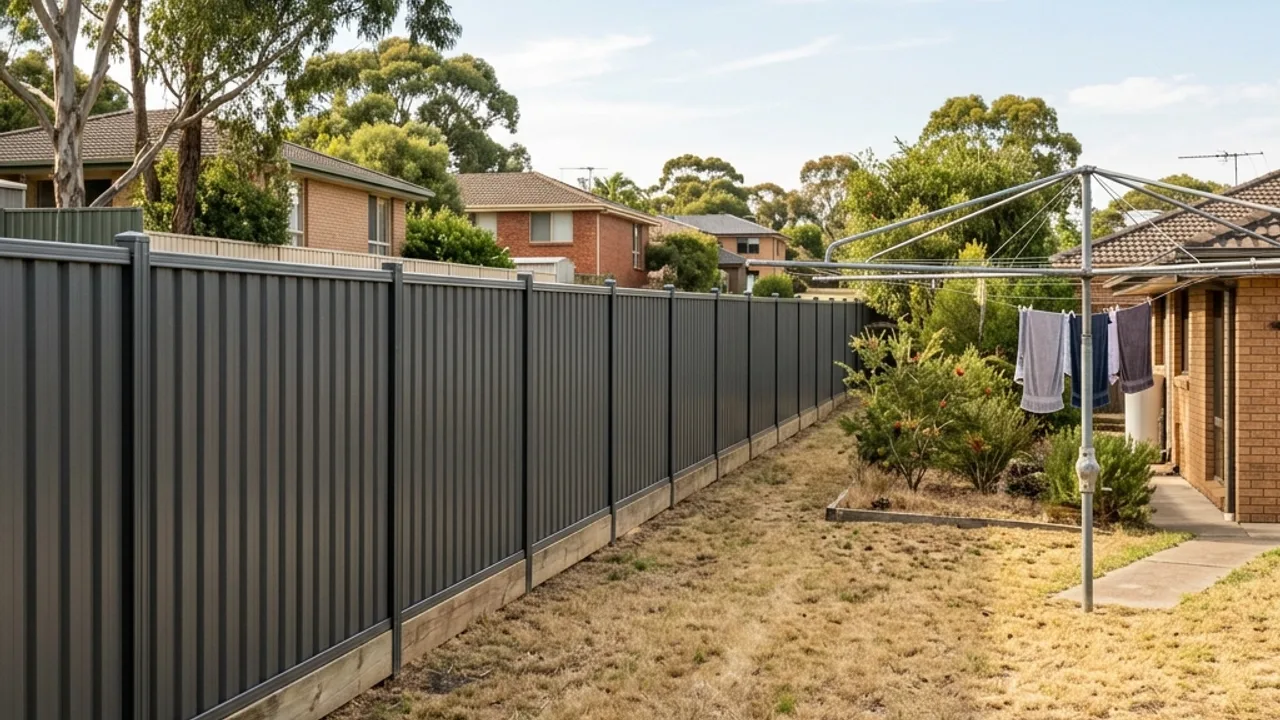
Colorbond is the steel panel fence most Toowoomba blocks end up with, and usually for sound reasons. Here is what it costs to own, how high you can go, and what a neighbour is actually obliged to contribute.
Most people reading this are replacing a timber paling boundary fence that has reached the end of its life, on a flat block in Harristown, Centenary Heights, Kearneys Spring or Glenvale, and they are looking at Colorbond because both neighbours already have it. The usual assumption is that steel is the expensive upgrade. Counted properly, across the life of the fence, that is often not true. Colorbond is BlueScope's pre-painted steel sheet system, so you are buying a coated steel panel between steel posts and rails rather than a painted product that needs recoating. Tell us the run length, your suburb and whether a neighbour shares the boundary, and the first step is a measured site visit: the fence line gets walked, the fall and the digger access get checked, and a fixed price goes in writing before anything is ordered.
A full run of pre-painted steel sheet between posts and rails, set out from the boundary line and stepped where the ground falls away.
Old palings, rails and posts pulled out and carted away, with removal and disposal shown as its own quote line so two quotes can actually be compared.
Slat or lattice toppers and capped posts where you want a little more height or a tidier finish above a standard sheet run.
1.8 m is the common height. Above 2 m from natural ground the fence becomes building work needing a certifier, so the height is settled before ordering.
Woodland Grey, Monument and Basalt sit most naturally against Toowoomba brick, render and roof colours. The sample goes against the house, not against a brochure.
Pedestrian and double gates with matching sheet infill, on posts footed deeper than the fence posts because a gate post carries far more movement.
The comparison worth making is not sticker against sticker, it is what the fence costs you across its life. Colorbond runs higher on materials and lower on labour, because a sheet run goes up quickly once the posts are set. Timber is the other way around, and then it asks for oiling or sealing every few years. One buyer pricing both over a 17 metre run found roughly $200 between the installed figures. Over a longer boundary the gap widens, though not by the multiple most people brace for.
What genuinely moves a Colorbond price on your block: run length, sheet height, how much the ground falls and therefore how many steps the run needs, whether a post-hole digger can get down the side of the house, whether the digging is reactive black soil or rocky red basalt on the range, whether the old fence has to come out and go to the tip, and how many gates sit in the line. A per-metre figure quoted without those qualifiers beside it was priced for somebody else's block.
That is why a price follows a measure rather than a phone conversation. The run gets walked, the fall gets checked, access gets checked, and the number comes back fixed and in writing with removal and disposal itemised separately. Contractors quote that line inconsistently, and until it is separated out you cannot tell which of two quotes is actually cheaper.
A fence built on the boundary is a dividing fence, and the Neighbourhood Disputes (Dividing Fences and Trees) Act 2011 governs how the cost is shared in Queensland. Adjoining owners generally contribute equally to a sufficient dividing fence. For residential land that means between 0.5 m and 1.8 m high, substantially of the materials the Act lists, which cover timber palings and lattice, chain wire, metal panels or rods, brick, rendered cement, concrete blocks, a hedge, and other material a dividing fence is ordinarily built from.
The word doing the work there is sufficient. A neighbour's obligation is measured against a basic fence at that standard, not against the height, colour or finish you have pictured. Anything beyond sufficient is yours to cover. Far better to read that here than to discover it at the invoice, and it is exactly why the written quote matters: it puts a number on paper that both households can look at together.
Where the conversation stalls, the formal path is a notice to contribute, using the approved form and naming the land, the fence line, the type of work and the estimated cost, with at least one written quotation attached. If there is no agreement within one month, either owner may take the matter to QCAT within two months of the notice. Split invoicing is available so each household is billed its own share. What nobody can do is promise you how your neighbour will respond.
Run length in metres, your suburb, the height you have in mind, and whether a neighbour shares the boundary. A photo of the existing fence tells us more than a paragraph.
The boundary is confirmed from the title plan or existing survey pegs, the fall is measured so stepping can be set, and digger access is checked before any figure is put forward.
Sheet height, run length, colour, gates and old-fence removal itemised separately, with a stated validity period so the number holds while you talk to next door.
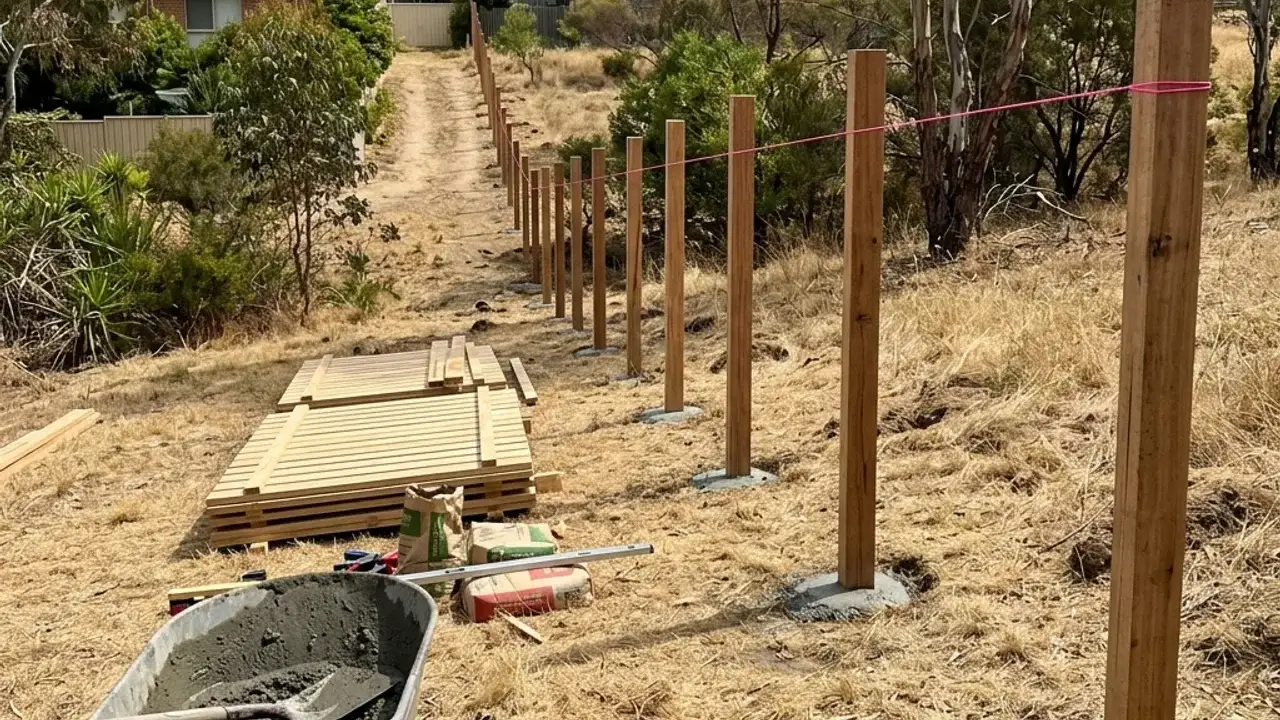
Posts footed to suit the soil and the block's wind exposure, sheets fitted once the concrete has cured, the old fence taken away and the run left swept.
Post spacing and footing depth on a solid sheet run come off the manufacturer's wind-classification tables for that block's exposure. A ridge-top site in Rangeville is a different calculation to a sheltered street in Harristown, and the difference shows up years later in whether the run is still plumb.
Steel panels bang in a range wind when fixings have worked loose, posts are spaced too widely, or the run was built for a lower wind class than the site actually carries. That is a specification matter, so it gets settled at the measure instead of promised away afterwards.
Where the fence line is shared, each household can be invoiced its own portion, so nobody is chasing a neighbour for money and the paperwork matches whatever the two of you agreed.
On materials, yes. Installed, the gap narrows because a sheet run erects faster, and across the years timber adds an oiling or sealing cycle that steel does not. Compare the cost of owning the fence rather than the material invoice on its own.
They contribute toward a sufficient fence at the 0.5 to 1.8 m prescribed-material standard, and metal panels sit inside that standard. Extra height or a finish beyond sufficient is yours. Agree the material and the standard in writing before anything is ordered.
Not by itself. A pool barrier has to satisfy the Queensland pool safety standard, including the non-climbable zone and the gate requirements, and it is assessed as a barrier rather than as a boundary fence. The pool fencing page covers what that involves.
Questions Toowoomba homeowners bring to this job, answered plainly.
Pick your suburb for the local block, soil and access notes, or send the form and we will come back with a written quote for colorbond fencing.
Talk to a Toowoomba fencing specialist
Planning a Colorbond fence in Toowoomba?
Send the run length, your suburb and whether a neighbour shares the boundary. You get a measured site visit and a fixed written quote you can put in front of that neighbour.