
Tell us what failed
What has happened, how many metres are affected, whether it is a boundary fence, whether it forms part of a pool barrier, and your suburb. Photos help.
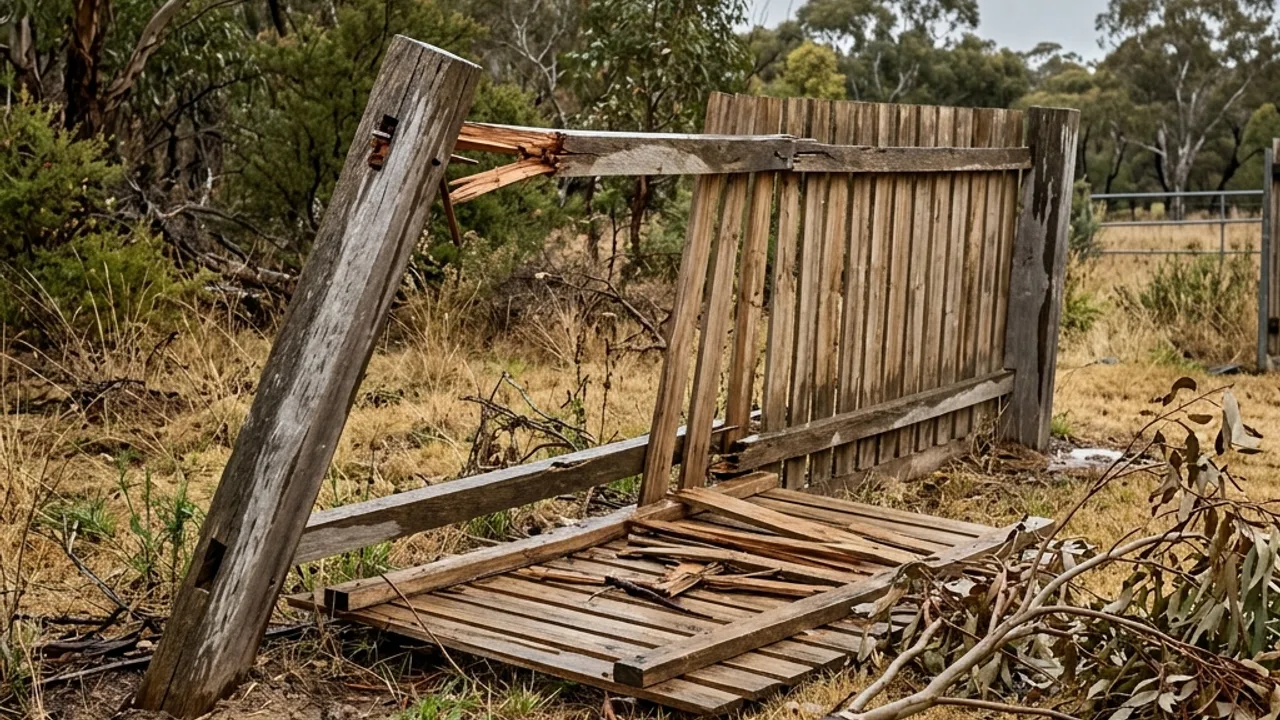
A run leaning, a limb across the fence, posts snapped at the ground, panels missing. Here is the repair or replace rule, and why the fence failed where it did.
The dog is out, or the yard is no longer secure, or a section is leaning far enough that the next wind will take the neighbour's side with it. Sometimes it is a limb down across the line after a range wind event, sometimes it is posts that quietly snapped at ground level, and sometimes it is Colorbond panels banging so hard the whole street can hear them. Where the damaged run forms part of a pool barrier it stops being cosmetic and becomes a containment problem that needs dealing with straight away. Most people also want to know whether this is a patch or a rebuild, and whether it is worth an insurance claim. Send what has failed, roughly how much length is affected, whether it is a boundary fence and your suburb.
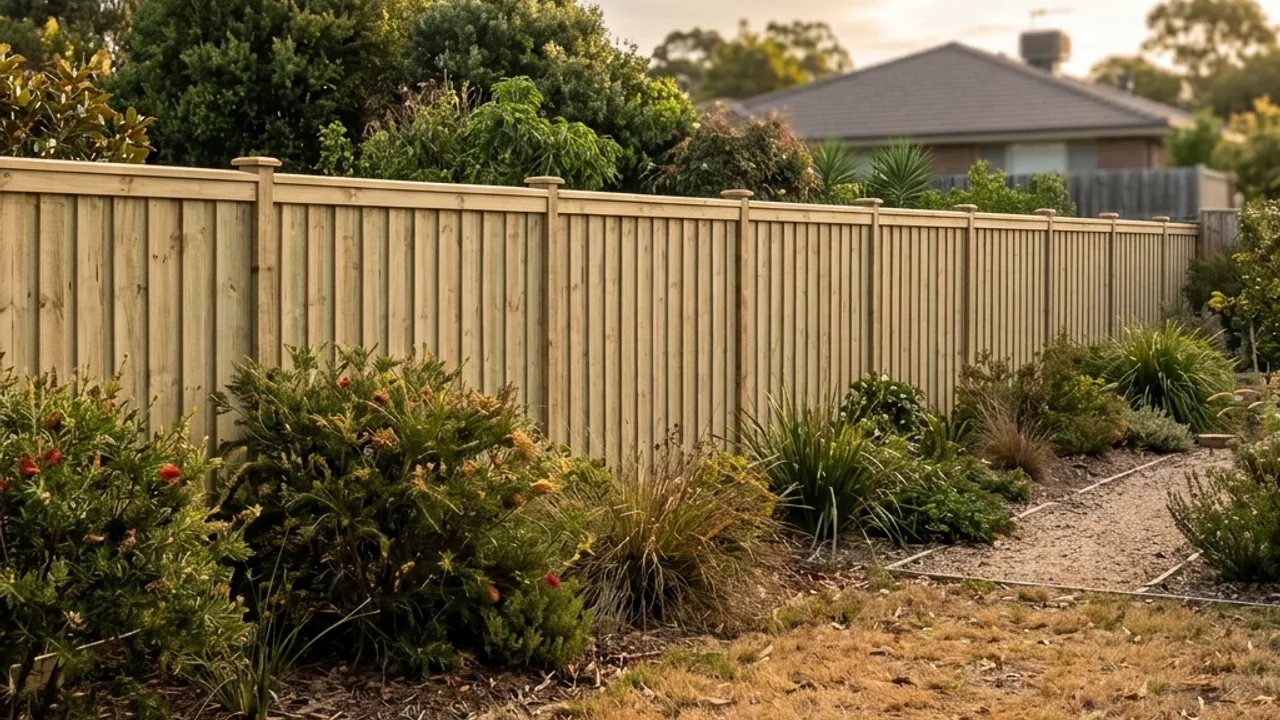
Individual posts re-set or replaced with footings sized for the soil, so the post that moved is not simply put back the way it was and left to move again.
Where a run is down or a limb is across it, the priority is closing the yard and making the section safe. The permanent repair is quoted after that.
Broken rails, split palings and damaged sheets replaced section by section where the frame and remaining posts are sound enough to justify it.
Colorbond banging in the wind is usually loose fixings, posts spaced too far apart, or a run built for a lower wind class than the block carries. It gets diagnosed, not just tightened.
Colours and profiles are matched as closely as the market allows. Older Colorbond colours and timber profiles are sometimes discontinued, and if a repaired section will be visible you get told first.
Photographs before anything is moved, a written quote and a plain description of the cause. Lodging the claim is between you and your insurer.
The rule is simpler than most people expect and it has three parts. How many posts are affected: one loose or snapped post in an otherwise sound run repairs economically, while posts failing at intervals along the whole length is a replacement wearing a repair's clothing. Whether the frame is sound: if the posts and rails are structurally fine and only the face is damaged, that is a genuine repair. And whether it has been patched before: a run on its second or third repair is telling you something, and spending again on it usually means paying twice inside a couple of years.
Where a run is actually down, or a limb is sitting across it, make-safe comes first and gets separated from the permanent fix on the quote. Closing an open boundary so a dog cannot get onto the road, or so a pool is contained again, is not the same job as rebuilding the fence properly, and pretending it is leads to temporary work being paid for as permanent work. Two lines, two prices, clear about which is which.
Matching is the honest conversation nobody enjoys. Colorbond colours and timber profiles change over the years and some are no longer made, so a repaired section can read slightly differently from the rest of the run even when it is well built. If that is likely on your fence you will hear it before the work is booked rather than after.
Two mechanisms cause most of it and both are local. Out west across Harristown, Glenvale, Westbrook and Cotswold Hills the reactive black soil is the quiet culprit: it swells wet and shrinks dry, lifting and leaning posts over successive cycles with no storm involved, and the gate post goes first because it carries the most load. On the range edge the mechanism is wind. Toowoomba sits near 700 m on the crest of the Great Dividing Range, and exposed escarpment and ridge-top blocks classify higher for wind than sheltered suburbia, so a solid run there carries loads a standard footing may never have been sized for.
In timber the third mechanism is ground-line rot, where moisture and soil meet the post and quietly take it apart, which is why a fence can look sound and then let go in one gust. Storm season adds the visible cause: limbs down across fence lines on the bushland-fringe blocks through Mount Lofty and the mature streets of East Toowoomba. Which mechanism took your fence out matters, because a post re-footed at the same depth fails the same way.
On cost sharing, a repair to a dividing fence is treated much like a replacement: adjoining owners generally share the cost of restoring a shared fence to a sufficient standard under Queensland's dividing fence law. That is the process, not a promise about what your neighbour will agree to. A written quote in hand is what makes that conversation possible, and each household can be invoiced its own share so nobody is collecting money from next door. One practical note on timing: a re-footed post needs its concrete to cure before panels go back on, and a frosty Toowoomba winter morning slows that down more than people expect.
What has happened, how many metres are affected, whether it is a boundary fence, whether it forms part of a pool barrier, and your suburb. Photos help.
Posts checked along the run rather than only at the break, the frame assessed, the cause identified, and any previous repairs taken into account before advice is given.
Where the yard is open, the section is made safe first. The permanent repair or replacement is then quoted separately, with material matching flagged where it applies.
Posts re-footed to a depth that suits the soil, concrete left to cure before panels are refixed, and the damaged material taken away.
The question is not only what broke but why it broke there. A post re-set at the same depth in the same reactive clay will do exactly what it did last time, so the cause gets identified and the repair is specified to outlast it.
If your run needs replacing you will be told that, even where a cheaper patch could be sold today. Paying for a repair and then a replacement inside two years is the outcome this advice exists to prevent.
Photographs before anything is moved, a written quote and a clear description of the cause is what an insurer generally wants to see. No claim outcome, approval or preferred-repairer status is claimed here, because none exists.
Count the failing posts, check whether the frame is sound, and consider whether it has been patched before. Localised damage with a sound frame repairs well. Posts giving way along the length is a replacement.
No timeframe is promised, and it would not be honest to give one before seeing the damage. What happens is this: send the detail and photos, the damage gets looked at, anything unsafe is made safe, then a written quote follows for the permanent fix.
As closely as the market allows. Some older Colorbond colours and timber profiles are no longer manufactured, and where a repaired section will be visible you are told before the work starts.
Repairs to a shared dividing fence are generally shared between adjoining owners under Queensland law, in the same way replacement is. That is the process rather than a guarantee, and split invoicing means each household is billed its own portion.
Questions Toowoomba homeowners bring to this job, answered plainly.
Pick your suburb for the local block, soil and access notes, or send the form and we will come back with a written quote for fence repairs & storm damage.
Talk to a Toowoomba fencing specialist
Fence down, leaning or no longer holding?
Send photos, roughly how much length is affected and whether it is a boundary fence. You get an honest repair or replace answer and a written quote.