
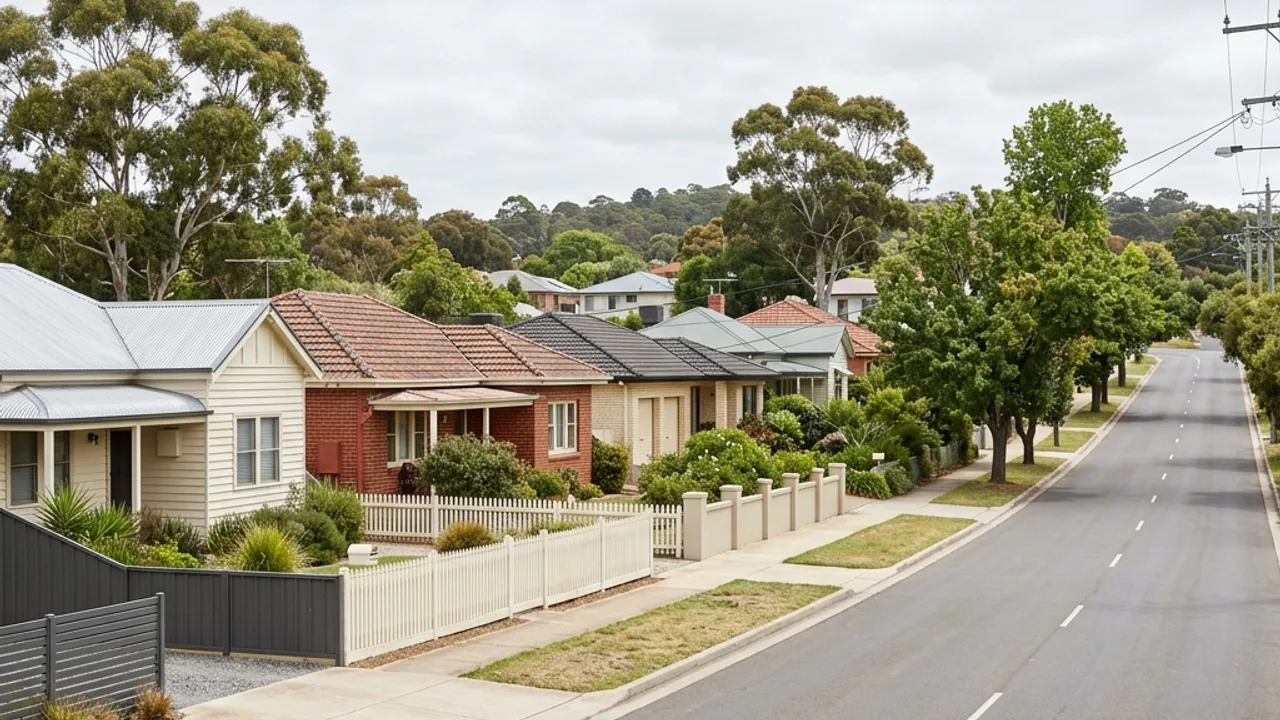
Newtown postcode 4350, Toowoomba
Fencing in Newtown
One of Toowoomba's oldest residential suburbs, subdivided from 1865, with character cottages and post-war homes on compact blocks suited to timber paling and picket fencing.
In Newtown the fence is rarely the hard part. The hard part is the conversation next door, because on blocks this size almost every boundary is shared with somebody. This page sets out how Queensland actually handles dividing fence costs, what a notice to contribute is for, and how a job gets built where there is barely a metre between the house and the line.
Replacing a dividing fence on a compact Newtown block
Queensland has a specific law for this and it is worth knowing before you knock on the door. Under the Neighbourhood Disputes (Dividing Fences and Trees) Act 2011, adjoining owners generally contribute equally to a sufficient dividing fence - and sufficient has a definition. For residential land it means a fence between 0.5 m and 1.8 m high, substantially made of prescribed materials such as timber palings, chain wire, metal panels, brick or rendered cement. That is the benchmark your neighbour's share is measured against. If you want something better than sufficient, the difference is yours. Knowing that changes the tone of the conversation, because you are no longer asking for a favour, you are proposing a split against a standard.
The process itself is deliberately unglamorous. You talk first. If that does not land, the Act provides a notice to contribute: an approved form that states the land, the fence line, the type of work and the estimated cost, with at least one written quotation attached. If the owners have not agreed within one month of that notice, either of them may apply to the Queensland Civil and Administrative Tribunal within two months. Contribution can be money, labour or materials, not only cash. Nobody can promise you what your neighbour will do or what a tribunal would decide, and any site that tells you otherwise is selling something. What can be described is the sequence, and the sequence starts with a written quote you can actually put in front of them.
That is why the quote gets structured the way it does. It is written per metre of the run with the fence type and height stated, removal and disposal of the old fence on its own line, and gates priced separately, so it stands up as the attachment to a notice. Where a boundary is being shared, invoicing can be split so each owner is billed their own share directly rather than one of them fronting the whole amount and then chasing the other. That single arrangement resolves more Newtown standoffs than any argument about materials does.
Then the physical job. Newtown was subdivided from 1865 and the lots show it: narrow, deep, and close together. Side access between a cottage and its boundary is frequently too tight for a post-hole machine, so holes get dug by hand and every post, rail and bag of concrete is carried in from the street. Old fences here are often the third or fourth generation on the same line, which means buried concrete footings from the previous ones. Both of those are labour, both belong in the quote, and both are the reason a 20 m run in Newtown can price differently from a 20 m run on an open block out west.
Why Newtown homeowners bring us in before the neighbour conversation
A quote built to be shown to a neighbour
Fence type, height, run length, old-fence removal and gates are itemised, because the Queensland notice-to-contribute process requires a written quotation attached and a vague total is no use to you at that point.
Split invoicing where a boundary is shared
Each owner can be billed their own share directly. It removes the part people dread most, which is paying the lot up front and then having to ask for half of it back.
Hand-dug access priced properly
On lots this narrow, machines often cannot reach the line and old footings are still in the ground. That labour is in the written price rather than turning up later as a variation.
We work on fencing throughout the Toowoomba region and bring in licensed operators for the work that legally requires them.
About Newtown
Newtown is one of Toowoomba's oldest residential suburbs, subdivided from 1865, and it packs a lot into a small footprint.
Clifford Gardens Shopping Centre and Clifford Park Racecourse both sit inside it, Newtown State School serves the local families, and The Glennie School holds a long-established campus frontage. Taylor Street, Tor Street, Herries Street and West Street carry the traffic those destinations generate straight past residential front fences. The housing is a layered mix of surviving character cottages and post-war infill on compact allotments, with a solid proportion of tenanted properties alongside owner-occupiers. Because the lots are small and the houses close together, boundaries here are almost always shared on both sides, so a fence replacement is usually a negotiation with two different households rather than a decision one owner makes alone.
What shapes a fence line in Newtown
The 1865 subdivision pattern is still doing the work. Lots are narrow and deep, houses sit close to their side boundaries, and the gap you would push a wheelbarrow through is often less than a metre. That rules out machine post-hole digging on plenty of side runs and puts every material movement on someone's shoulder. Because the fences here have been replaced repeatedly, the ground along the line frequently holds concrete from earlier posts that has to come out before new ones go in. And with retail and racecourse traffic on Taylor Street and Tor Street, front boundaries on those roads are chosen for noise and headlight screening rather than looks, which usually points to a solid fence rather than a spaced one.
Fencing services available in Newtown
Pick the material or job type that matches what you are planning for a closer look at scope, decision points and compliance.
Get help with your Newtown project
Sorting a shared fence in Newtown?
Tell us the run length and whether a neighbour is involved, and we will help you get a written quote in a shape you can actually hand over next door.
Tell us what is happening in Newtown and we will help you take the next step.
Your details help us understand what you need and respond clearly.
Adjacent suburbs we also cover
Newtown borders Wilsonton to the north-west, Harristown to the south, Glenvale to the west, and Rockville and Toowoomba City around its remaining edges. Harristown blocks are noticeably more generous, so a run there is usually a simpler machine-access job than the same length here.
Also adjoining Newtown: Rockville, Toowoomba City.
Other Toowoomba suburbs
Fencing questions from Newtown
The questions that come up most on Newtown enquiries, answered as they apply in Queensland.