
Tell us the situation
New pool, a sale or lease needing a certificate, or a barrier that has failed. Include the pool type, your suburb and whether an inspector has already been through.
A pool barrier is safety legislation, not a style choice. This page sets out what the Queensland standard actually requires in millimetres, and who signs it off.
A new pool is going in and the barrier has to be right before it is filled. A property is being sold or leased and a pool safety certificate is needed to settle. Or a barrier has just failed an inspection and there is a date attached to fixing it. All three are the same job with different pressure behind them, and all three turn on dimensions rather than taste. What follows is the standard as it applies in Queensland, the decisions that sit inside a compliant install, and a clear line about who does what: a barrier is built here, and it is certified by a licensed pool safety inspector who is a separate person with a separate authority. Send the pool type, whether a certificate is needed for a sale or lease, and your suburb.
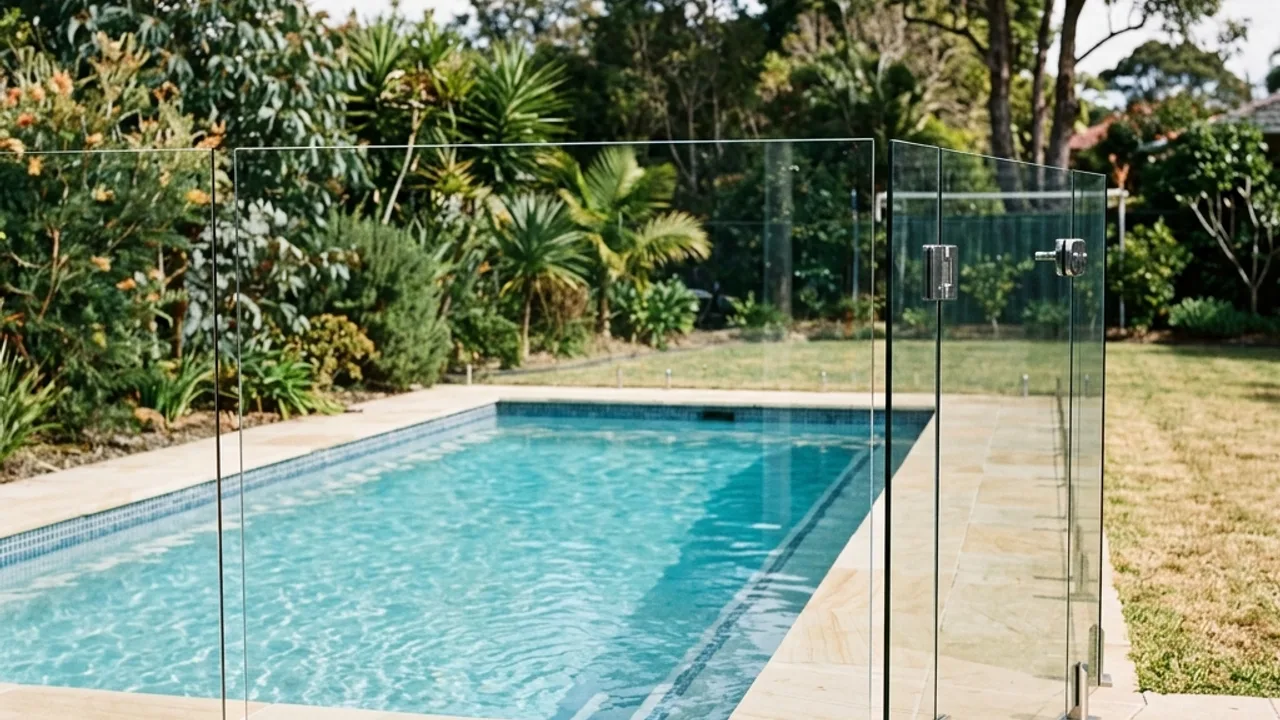
Toughened glass panels on spigots for a frameless look, or between slim posts for semi-frameless. Both keep the view across the yard open.
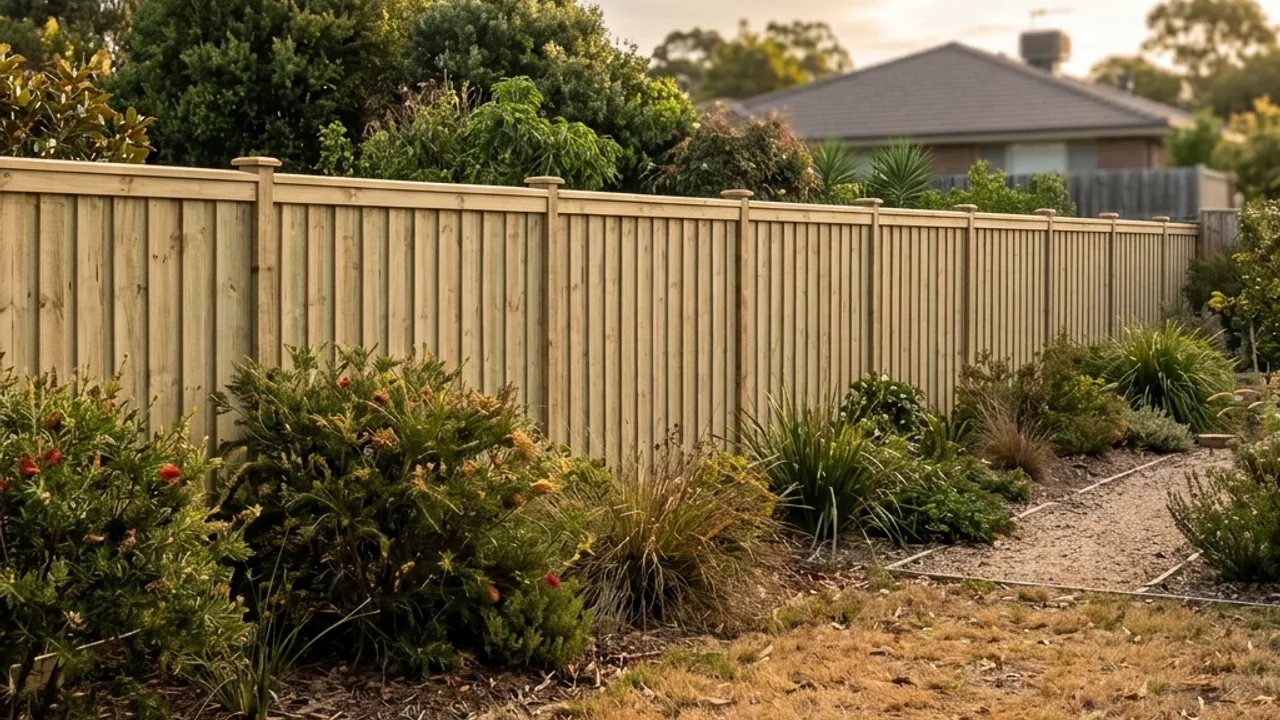
Powder-coated aluminium with vertical members spaced inside the permitted gap. The workhorse of pool barriers and the more forgiving option on a sloping surround.
Gates that close and latch themselves from any position, open away from the pool, with the latch release set at the required height above ground.
A 900 mm arc around the barrier has to stay clear of footholds. Pots, furniture, a retaining wall or a neighbouring structure inside that arc breaks compliance no matter how good the fence is.
Barrier height is measured from finished ground, so soft-fall, paving levels and garden beds all change the number. That gets resolved before panels are ordered.
Sometimes an existing boundary fence can form part of the barrier and sometimes it cannot. It depends on the standard and on what sits within the non-climbable zone on either side, so it is assessed on site.
Glass buys you the view. On a landscaped surround in Middle Ridge or on an acreage block at Highfields where the pool looks out over the yard, frameless glass keeps the outlook uninterrupted in a way no other barrier does. It costs more, it shows every splash and every finger mark, and it wants cleaning to keep looking like the reason you bought it. Frameless sits on spigots set into the surround; semi-frameless puts slim posts between the panels, which brings the price down and reads as a lighter version of the same idea.
Aluminium flat-top is the practical choice and it is not a compromise. Powder-coated, light to handle, and far more adaptable where the pool surround steps or falls away, because a panel system with posts can follow ground that glass would fight. It also disappears against planting in a way glass does not. The honest way to choose is to decide whether you are buying a view or buying a barrier, then price both against the length of the run rather than against a per-panel figure.
Whichever material, the compliance detail is identical because the standard does not care what the barrier is made of. Every gap, every height and every hardware position has to land inside the same numbers, and the barrier is a system: fence, gate, hardware, ground level and the space around it, all assessed together.
Queensland pool barriers are governed by Queensland Development Code Mandatory Part 3.4, which applies AS 1926.1 under the Building Act 1975. The core dimensions, as at July 2026: the barrier is at least 1200 mm high measured from finished ground, the gate latch release sits at least 1500 mm above ground, a 900 mm non-climbable zone applies, gaps between vertical members are no more than 100 mm, and ground clearance beneath the barrier is no more than 100 mm. Gates are self-closing and self-latching from any position and open away from the pool.
Certification is a separate function. A pool safety certificate is issued by a licensed pool safety inspector, licensed under the Building Act rather than as a trade licence, and it is valid for two years on a non-shared pool and one year on a shared pool. You need a current certificate to sell or lease a property with a pool, which is why this work so often has a settlement or tenancy date sitting behind it. Pool safety in Queensland is state legislation, not a council rule.
Two practical consequences follow. First, a barrier built to the dimensions above is built to pass, but the pass itself belongs to the inspector and nobody building the fence can guarantee it. Second, the non-climbable zone means compliance can be lost after handover simply by moving a pot plant or parking an outdoor setting in the wrong place, which is worth knowing before the inspection rather than after it.
New pool, a sale or lease needing a certificate, or a barrier that has failed. Include the pool type, your suburb and whether an inspector has already been through.
Finished ground levels, the line the barrier can take, what falls inside the non-climbable zone on both sides, and whether an existing fence can form part of the barrier.
Material, panel and gate schedule, hardware, and any surround or level work the barrier depends on, itemised so the scope is visible.
The barrier goes in to the standard's dimensions. You then engage a licensed pool safety inspector, who assesses it and issues the certificate.
Every height, gap and clearance on a pool barrier is a number in the standard. The specification is written against those numbers before anything is ordered, which is the only sensible way to approach work where the inspection is pass or fail.
Most barriers that surprise their owners are compliant fences in a non-compliant setting: a retaining wall, a garden bed, a shed wall or furniture sitting inside the 900 mm arc. That surround is assessed at the same time as the fence line.
Barriers are built here. Certificates are issued by licensed pool safety inspectors, and inspections are their work, not ours. Knowing where that line sits saves you time when a settlement date is involved.
It is built to the dimensions the standard sets, which is what passing depends on. The pass itself is the inspector's determination, so no guarantee can honestly be offered by anyone who builds the barrier. What can be offered is a barrier specified against the code from the outset.
Glass carries a higher material and installation cost, and semi-frameless sits between the two. The gap depends on run length, panel sizes and how the surround is built, so both get priced properly rather than compared with a figure off a forum.
No timeframe is promised here, and you should be sceptical of anyone who promises one before seeing the site. Send the date and the detail, and the site assessment and written quote come back so you can make an informed decision about sequencing.
Pool barriers in Queensland must comply with the pool safety standard (QDC MP3.4) under the Building Act 1975. Compliance is confirmed by a licensed pool safety inspector, not by this website or by DIY checklists. Non-compliant barriers attract significant penalties.
Questions Toowoomba homeowners bring to this job, answered plainly.
Pick your suburb for the local block, soil and access notes, or send the form and we will come back with a written quote for pool fencing.
Talk to a Toowoomba fencing specialist
Need a pool barrier built to the standard?
Send the pool type, your suburb and whether a certificate is needed for a sale or lease. You get a site assessment against the code and a written quote covering fence, gate and hardware.