
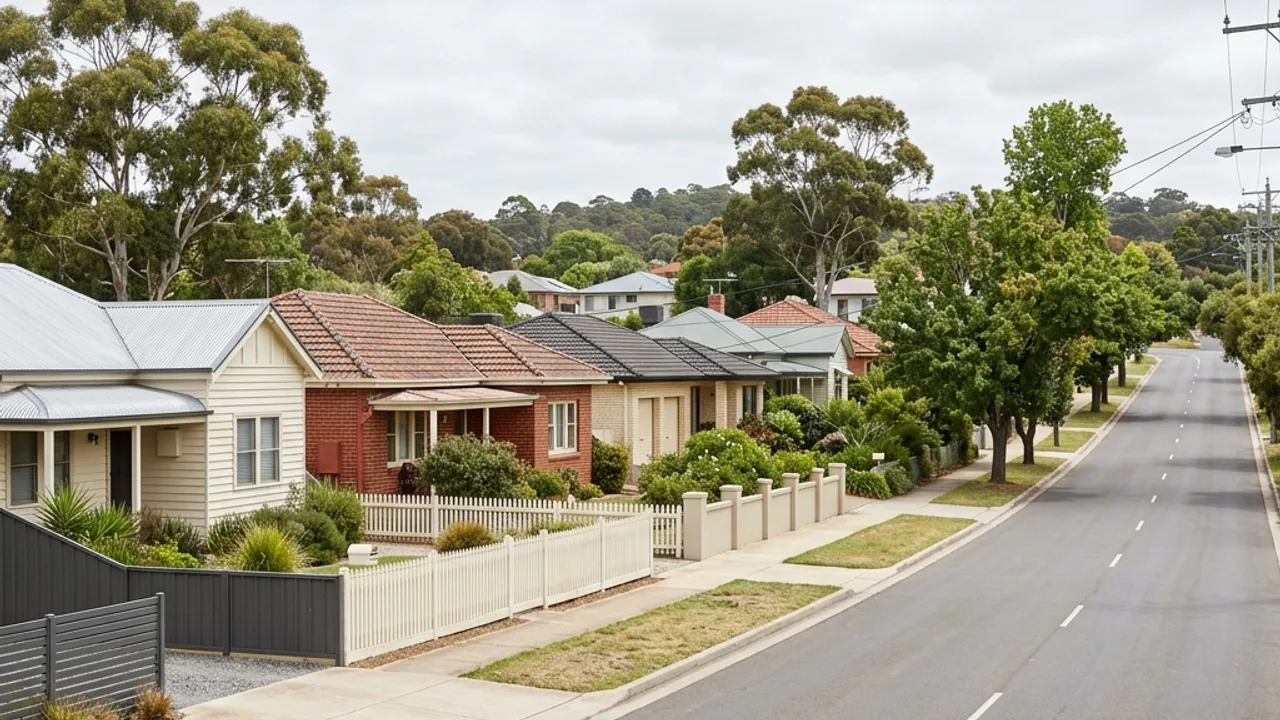
Darling Heights postcode 4350, Toowoomba
Fencing in Darling Heights
University suburb that grew around UniSQ from the 1960s, mixing family homes, student rentals and unit blocks that need everything from timber paling to low-maintenance Colorbond.
Around the university a lot of fencing enquiries stall on the same thing: nobody is sure who can actually agree to the work. If one side of the boundary is tenanted, the person you can see is not the person who decides. This page sorts out who the parties are on a rental boundary, and covers material choice for properties where nobody is going to be out there oiling timber.
PVC fencing and low-upkeep options for Darling Heights rentals
Take the ownership question first, because everything else waits on it. A dividing fence is a matter between the owners of the two properties. A tenant is not a party to it, cannot agree to a cost share on the owner's behalf, and is under no obligation to arrange anything. If the property next door is rented, the person to reach is the registered owner or the agent acting for them, and a notice to contribute under the Queensland dividing-fence process is served on the owner, not on whoever is living there. A tenant may be willing to pass on a name or forward a letter, and that is often the fastest route, but the agreement itself has to be made with the owner. Where the property is a unit block, a body corporate may be the relevant party instead, which adds a decision-making process rather than a single person.
That reality shapes how a quote for this area is put together. It needs to be a document that survives being emailed to a property manager and then to an owner who has never seen the fence: run length, fence type and height, removal of the existing fence, and a clear figure, with the option of splitting the invoice so each owner is billed their own share directly. Owners at a distance are far more likely to say yes to a defined amount on their own invoice than to a request to reimburse a stranger.
Material choice then follows from who maintains the property. On an owner-occupied home a timber fence that wants oiling every few years is a reasonable trade for a lower purchase price. On a tenanted house or a unit block, that maintenance is not going to happen, so the sensible options are the ones with no upkeep cycle at all. PVC panels never need painting and hold their colour without attention. Steel panel fencing has no oiling requirement and copes with knocks. Both cost more to buy than a timber paling run and both remove a recurring cost and a recurring argument about whose job it was. Over a decade on a rental, that is usually the cheaper decision rather than the more expensive one.
The other practical factor is turnover. Properties near a university campus see tenants change regularly, and fences near shared driveways, bin areas and parking take incidental damage - gates left open, panels knocked, latches broken. Specifying heavy-duty hardware rather than delicate, and setting gate posts properly so a gate that gets swung hard stays plumb, matters more here than the look of the fence does. Where a boundary is shared with a unit block, a full-height solid run also does real work on privacy and noise between properties that keep different hours.
Why Darling Heights owners and managers get further with these quotes
Written for an owner who has not seen the fence
Run length, fence type, removal and a clear figure, in a form that survives being forwarded from a tenant to an agent to an interstate owner. That is usually what unblocks a boundary nobody has been able to resolve.
The right party identified first
Owner, agent or body corporate. A tenant cannot agree to a cost share and should not be asked to, so the conversation starts with working out who actually has authority over the boundary.
Specified for no maintenance
On tenanted property, a fence needing periodic oiling will not get it. Material and hardware are chosen so the fence is still doing its job in ten years without anyone attending to it.
Fencing across the Toowoomba region is our focus, and licensed operators handle the parts of the work that are regulated.
About Darling Heights
Darling Heights grew up around the university from the 1960s and it still functions as a campus suburb.
The University of Southern Queensland's Toowoomba campus dominates it, the Ju Raku En Japanese Garden sits on the campus grounds as one of the region's better-known public gardens, and Darling Heights State School serves the resident families. West Street runs along the eastern side, with Baker Street and Platz Street threading through the residential pockets. The property mix is unusual for Toowoomba: conventional family homes sitting beside student rentals and unit blocks, with a meaningful share of dwellings owned by investors rather than occupiers. That ownership pattern is the single most useful thing to know before starting a fence here, because it determines who has to agree to the work and how long that takes.
What shapes a fence line in Darling Heights
The ownership structure is the local condition that matters. A boundary here has a reasonable chance of having an investor, an agent or a body corporate on the other side of it rather than a household you can knock on, which stretches the timeline and changes the paperwork. Physically, the suburb brings its own patterns: unit blocks mean shared driveways, bin enclosures and parking areas pressed up against boundaries, so fences take incidental knocks and gates get used carelessly. Properties directly adjoining the campus side have long institutional boundaries rather than neighbour-to-neighbour runs. And with tenants keeping different hours from owner-occupiers next door, full-height solid fencing between those properties earns its cost in privacy and noise rather than appearance.
Fencing services available in Darling Heights
Pick the material or job type that matches what you are planning for a closer look at scope, decision points and compliance.
Get help with your Darling Heights project
Sorting a rental or unit-block fence in Darling Heights?
Tell us whether the other side is tenanted or part of a unit block, and we will help you get a quote in a form an owner or agent can act on.
Tell us what is happening in Darling Heights and we will help you take the next step.
Your details help us understand what you need and respond clearly.
Adjacent suburbs we also cover
Darling Heights adjoins Harristown to the north and Kearneys Spring to the east, with Drayton and Top Camp on its other sides. Kearneys Spring is the neighbour where a shared boundary is most likely to involve a recently created lot.
Also adjoining Darling Heights: Drayton, Top Camp.
Other Toowoomba suburbs
Fencing questions from Darling Heights
The questions that come up most on Darling Heights enquiries, answered as they apply in Queensland.