
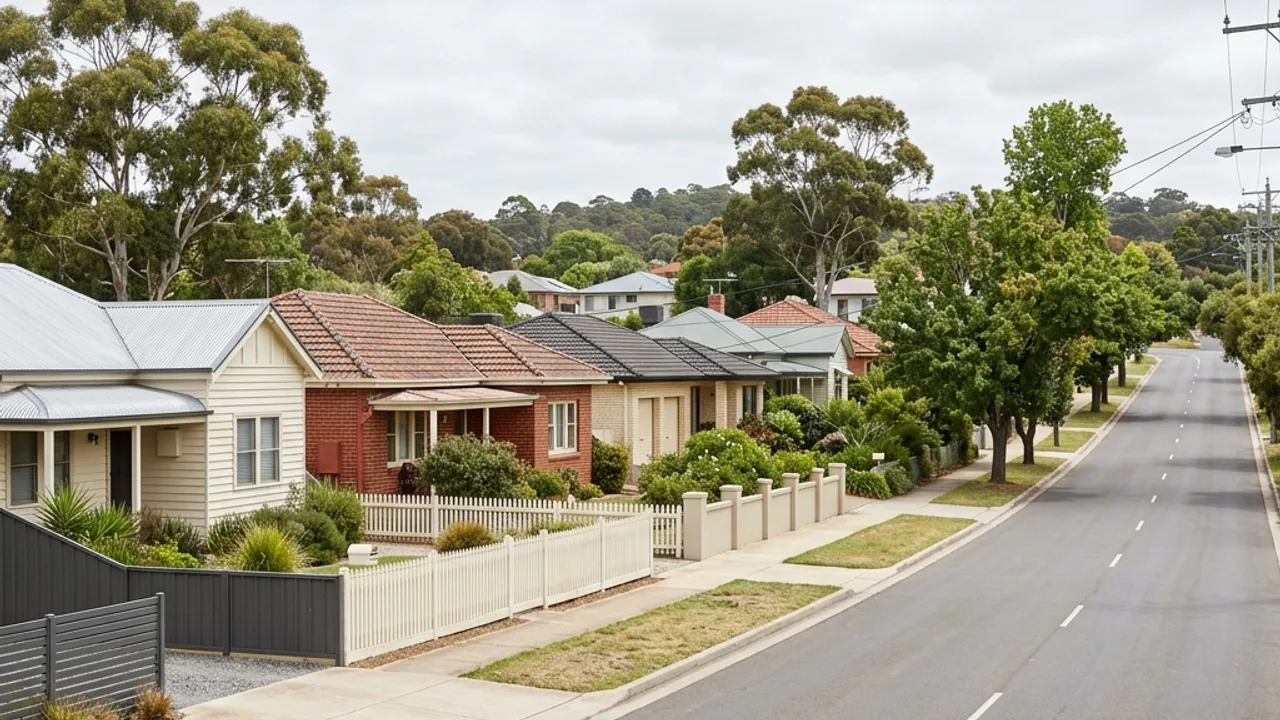
Rangeville postcode 4350, Toowoomba
Fencing in Rangeville
Established family suburb along the crest of the Great Dividing Range, with sloping escarpment-edge blocks that often need stepped or retained fence lines.
Fencing in Rangeville is a slope problem before it is a material problem. The suburb sits along the crest of the range and a good number of its blocks fall away hard, which means the fence cannot simply be a straight line of panels. Here is how a run gets set out on a fall, when a retaining wall underneath changes the approval picture, and what the exposure up here does to post spacing.
Stepping a Colorbond fence down a Rangeville slope
On a fall there are two honest ways to build. Stepping holds every panel level and drops the line in increments at each post, which gives a clean top edge and leaves a triangular gap under each panel that has to be closed with a plinth, an infill or a bit of earthworks. Raking tilts the panels to follow the ground, which keeps the bottom tight to the soil and produces a sloping top edge. Steel panel systems step neatly and rake only within limits; timber palings can be cut to a rake because each board is fixed individually. Which one suits your run depends on how steep it actually is, and that is measured, not guessed from a photo.
The gap under a stepped fence is where most Rangeville disappointment comes from, so it gets settled at the quote. If a dog has to stay in, or the run backs onto parkland where wildlife comes through, the plinth is part of the scope rather than an afterthought. On steeper sections the practical answer is fewer, taller steps with a plinth board on each, or a short retained section that levels one part of the run. Whatever gets chosen, you should be able to see it in the quote as a line item instead of discovering the daylight after the last panel goes on.
A retaining wall under the fence changes the rules, and this is the suburb where that comes up most. In Queensland the wall and the fence are assessed on their combined height, and once that combination goes over 2.0 m above natural ground level, approval or siting discretion generally comes into it. That is worth knowing before you order a 1.8 m fence to sit on top of an existing 600 mm wall. Retaining wall design and construction is a separate trade to fencing, so where the wall itself needs work that gets called out rather than absorbed into a fencing quote and quietly done badly.
Then there is the exposure. Toowoomba sits at roughly 700 m on the crest of the Great Dividing Range, and the Australian wind-classification standard combines region, terrain, shielding and topography - which means an escarpment-edge block and a sheltered street two suburbs away are not the same site. A solid panel run catches the full load, so post spacing, post size and footing depth follow the manufacturer's wind tables for the block being fenced. Nobody can give you a class for the suburb; it is assessed for your site, and that assessment is exactly why the measure matters here more than it does on flat ground.
Why Rangeville homeowners talk to us before ordering panels
The fall is measured, not estimated
Step heights, panel count and where the line changes level are worked out on the block with a level and a stringline. That is the difference between a fence that follows the ground and one that has a wedge of daylight under the third panel.
Gaps at the bottom are part of the scope
Plinth boards, infills or minor earthworks under a stepped run are quoted openly rather than left as your problem. If you have a dog or a rear boundary against parkland, that gets asked about at the measure.
Retaining walls flagged, not fudged
Where a run sits on or beside a wall, the combined-height approval trigger is raised early and the wall is treated as separate trade work. We would rather tell you that up front than have a certifier raise it later.
Our focus is fencing right across the Toowoomba region, with appropriately licensed operators handling the work wherever the value or the fence type puts it in regulated territory.
About Rangeville
Rangeville occupies the southern crest of the range and it is one of the few Toowoomba suburbs where the topography is obvious from the street.
Picnic Point Parklands sits on its eastern edge where the land drops away into the Lockyer Valley, the Toowoomba Bicentennial Waterbird Habitat holds the low ground, J. E. Duggan Park serves the middle of the suburb, and Rangeville State School anchors the family catchment. Tourist Road traces the escarpment, while South Street, Mackenzie Street and Alderley Street run back across the plateau. The housing is established owner-occupier stock rather than new estate: brick and timber homes on blocks that were often cut before anyone worried about how a fence would sit on them. Buyers here tend to be long-term families upgrading a tired boundary, and the properties backing onto reserve have a different brief again.
What shapes a fence line in Rangeville
The defining feature is the fall. Blocks on the Tourist Road side and the streets running off it drop away toward the escarpment, so a boundary that measures 30 m on the plan can change more than a metre in height across its length. Alongside that, a fair number of rear boundaries here back onto reserve and parkland rather than another yard, which changes the job: there is no neighbour to share the cost with, the line is often less accessible, and what you are keeping out is wildlife rather than a dog. Blocks along the crest also sit exposed, with no shielding upwind, so a solid run works harder than the same fence on an internal street. Together those three things mean almost no two runs in this suburb are priced the same way.
Fencing services available in Rangeville
Pick the material or job type that matches what you are planning for a closer look at scope, decision points and compliance.
Talk to a fencing specialist
Fencing a sloping block in Rangeville?
Tell us roughly how far the ground falls across the run and whether there is a wall involved, and we will help you work out whether stepping or raking is the sensible answer.
Tell us what is happening in Rangeville and we will help you take the next step.
Your details help us understand what you need and respond clearly.
Adjacent suburbs we also cover
Rangeville shares boundaries with East Toowoomba to the north, South Toowoomba to the west, and Centenary Heights and Middle Ridge to the south. The slope eases as you move away from the escarpment, so a run in Middle Ridge is usually a simpler set-out than the same length here.
- Fencing in East Toowoomba
- Fencing in Centenary Heights
- Fencing in Middle Ridge
- Fencing in South Toowoomba
Other Toowoomba suburbs
Fencing questions from Rangeville
The questions that come up most on Rangeville enquiries, answered as they apply in Queensland.