
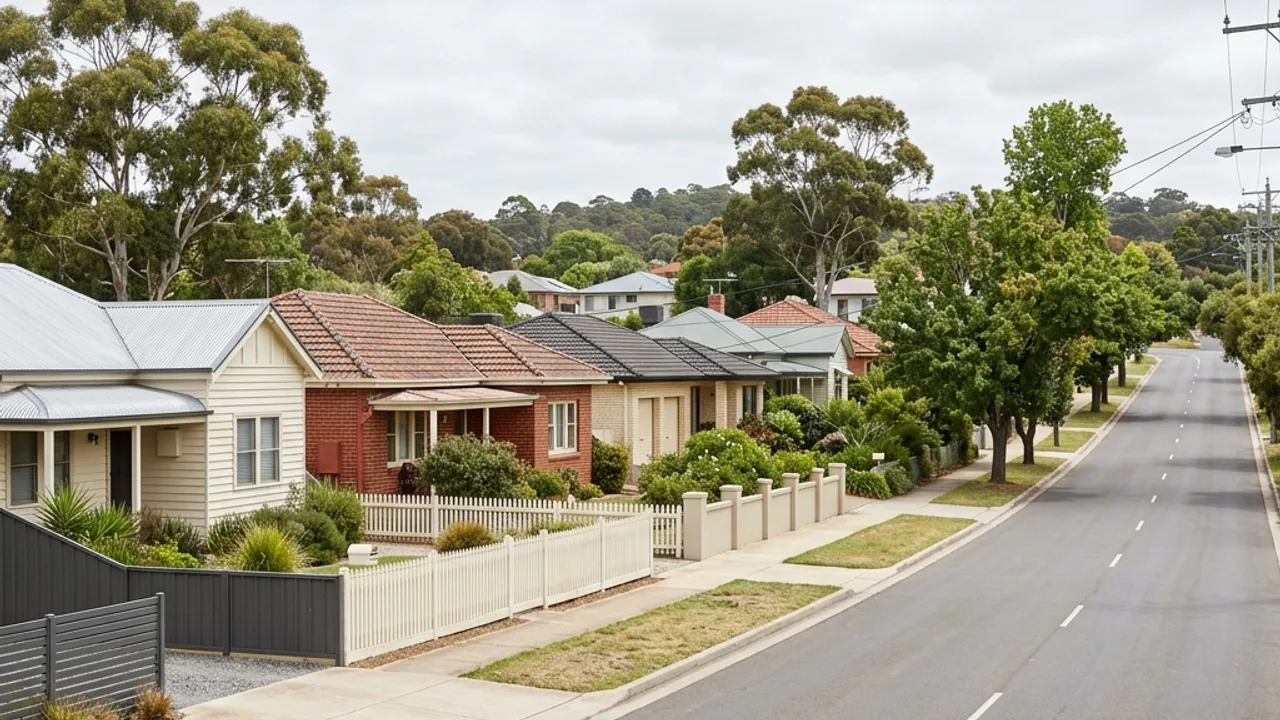
Highfields postcode 4352, Toowoomba
Fencing in Highfields
Booming satellite town north of Toowoomba and one of the region's fastest-growing areas, where new estates and larger lifestyle blocks need long Colorbond and timber boundary runs plus driveway gates.
A new house at Highfields often arrives with four bare boundaries and three neighbours whose fence lines all start at the same time. There is nothing there to match into, the block can be open to whatever the range sends across it, and the driveway runs a long way back from the road. Getting the order of those decisions right early is what stops the first fence being the wrong one.
New estate boundaries, driveway gates and gate automation at Highfields
A new house at Highfields usually arrives before its fences do, so the useful first step is working out which lines are yours alone and which are shared. A fence built wholly inside your own boundary is your own work at your own cost and needs nobody's agreement. A fence sitting on the boundary itself is a dividing fence, and Queensland runs that on the registered owner of the adjoining lot, which on a newly released street may be a builder, an investor or a family who moved in a fortnight ago. When three neighbours all reach that point in the same season there is a genuine advantage in talking early, because two adjoining owners agreeing on one material and one contractor for a shared run costs each of them less than two separate mobilisations along the same line. One thing to settle before you order anything: in Queensland a contractor needs a QBCC licence for residential fencing work valued at $3,300 or more including labour and materials.
Then the site itself, because Highfields sits high on the range and a good number of the newer estates are on open, elevated ground with nothing built upwind of them yet. The Australian wind-classification standard combines region, terrain, shielding and topography, so a block on a rise with clear ground around it is a more demanding site than the same block once the street is full of houses. A solid run, whether steel panels or overlapped timber, presents an unbroken face to that load. That is not a reason to avoid one, but it does mean post size, post spacing and footing depth follow the manufacturer's wind tables for your actual block rather than a standard depth. Nobody can hand you a wind class for the suburb off the top of their head, and the estates closest to the escarpment edge are exactly where guessing shows up first, usually as a rattle and then as a lean.
On a new build the material choice is genuinely open, because there is no existing fence on any side to tie into. Steel panel systems go up quickly, hold a straight line, need no repainting cycle and come in colours that can be matched to the roof or the garage door, which is why they dominate the newer streets off Highfields Road and Wirraglen Road. Overlapped timber palings with a capping board give a warmer look, suit a rendered or weatherboard facade and cost less to buy, but they want sealing or oiling periodically and every board is a piece that can cup or twist. Neither is maintenance-free in an exposed position, and they fail differently: steel takes the wind load as a single sheet, timber takes it board by board. The practical question is usually how long you plan to be there and whether you want to be painting a fence in five years.
The driveway is the part people underestimate. Entrances off the New England Highway service roads and along O'Brien Road often sit a long way back from the house, and getting out of the car twice in the rain to swing a gate open gets old quickly, so automation here is practical rather than indulgent. Three things settle the specification: the span, the gate type and the power. A sliding gate suits a wide opening where there is room to run alongside it; swing leaves need a clear arc and reasonably level ground, which is not a given on a sloping entrance. The motor is sized to the actual leaf weight rather than to a size category. And where there is no mains power out at the gate, a solar panel and battery arrangement is the normal answer, but it belongs in the specification from the start, because retrofitting power to a hung gate costs more and works less tidily.
Why Highfields owners sort the shared lines before anyone digs
Shared and solo boundaries separated first
Which lines are dividing fences with a registered owner on the other side, and which sit wholly inside your own block, gets settled before anything is priced. On a street where several neighbours are fencing at once that is what makes a shared run worth organising.
Exposure assessed for your block, not the suburb
Post size, spacing and footing depth for a solid run follow the manufacturer's wind tables for the actual site, because an open block on a rise is a harder site than the same block once the street is built out. We do not quote a wind class off the cuff.
Gate automation specified with the power supply
Leaf weight, span and how the motor gets power are settled together, including a solar and battery arrangement where there is nothing at the gate. Retrofitting that after the gate is hung costs more and works less well.
We work on fencing throughout the Toowoomba region and north into the Highfields area, with licensed operators on the work that Queensland requires them for.
About Highfields
Highfields is a satellite town on postcode 4352, north of Toowoomba on the New England Highway, and one of the fastest-growing parts of the region.
The Highfields Pioneer Village preserves the area's early settlement history, the Highfields Village Shopping Centre serves as the commercial centre, the Highfields Cultural Centre anchors community activity, and the Highfields Sport and Recreation Park covers a substantial sporting precinct. Highfields Road, O'Brien Road and Wirraglen Road run off the highway to serve the surrounding blocks. Growth here has been steady for years, so the housing sits in distinct layers: established homes on generous older blocks, and newer estates where whole streets have been released and built out within a few seasons. That second layer is where most of the fencing enquiries come from, because those blocks arrive with survey pegs and bare boundaries rather than a fence to repair, and the owners are making every decision - height, material, colour, gates - from scratch at the same time as their neighbours.
What shapes a fence line in Highfields
Two conditions do most of the work here. The first is elevation: Highfields sits on the higher ground north of the city and the newer estates are often on open rises with nothing built around them yet, so a solid fence carries a bigger wind load than the same fence in a settled street and the footings are specified accordingly. The second is timing. On a newly released street the boundaries on three sides may all be unfenced at once, which is either an expensive coincidence or an opportunity depending on whether the neighbours talk to each other. Beyond that, blocks are generally larger than an inner-city lot, driveways run further back from the road, and being on postcode 4352 rather than 4350 still puts you under Toowoomba Regional Council, with the estate roads off the New England Highway carrying the access.
Fencing services available in Highfields
Pick the material or job type that matches what you are planning for a closer look at scope, decision points and compliance.
Get help with your Highfields project
Fencing a new block at Highfields?
Tell us how many boundaries are bare, whether the neighbouring blocks are built on yet, and whether the driveway needs a gate that opens itself.
Tell us what is happening in Highfields and we will help you take the next step.
Your details help us understand what you need and respond clearly.
Adjacent suburbs we also cover
Highfields is surrounded by Kleinton, Meringandan, Cabarlah, Blue Mountain Heights and Cawdor, which are localities rather than pages on this site. The nearest suburbs we have detail pages for are listed below.
Also adjoining Highfields: Kleinton, Meringandan, Cabarlah, Blue Mountain Heights, Cawdor.
Other Toowoomba suburbs
Fencing questions from Highfields
The questions that come up most on Highfields enquiries, answered as they apply in Queensland.