
Describe the sightline
What you want to stop being seen, where you are standing or sitting when it bothers you, and whether the view comes from ground level or an upstairs window.
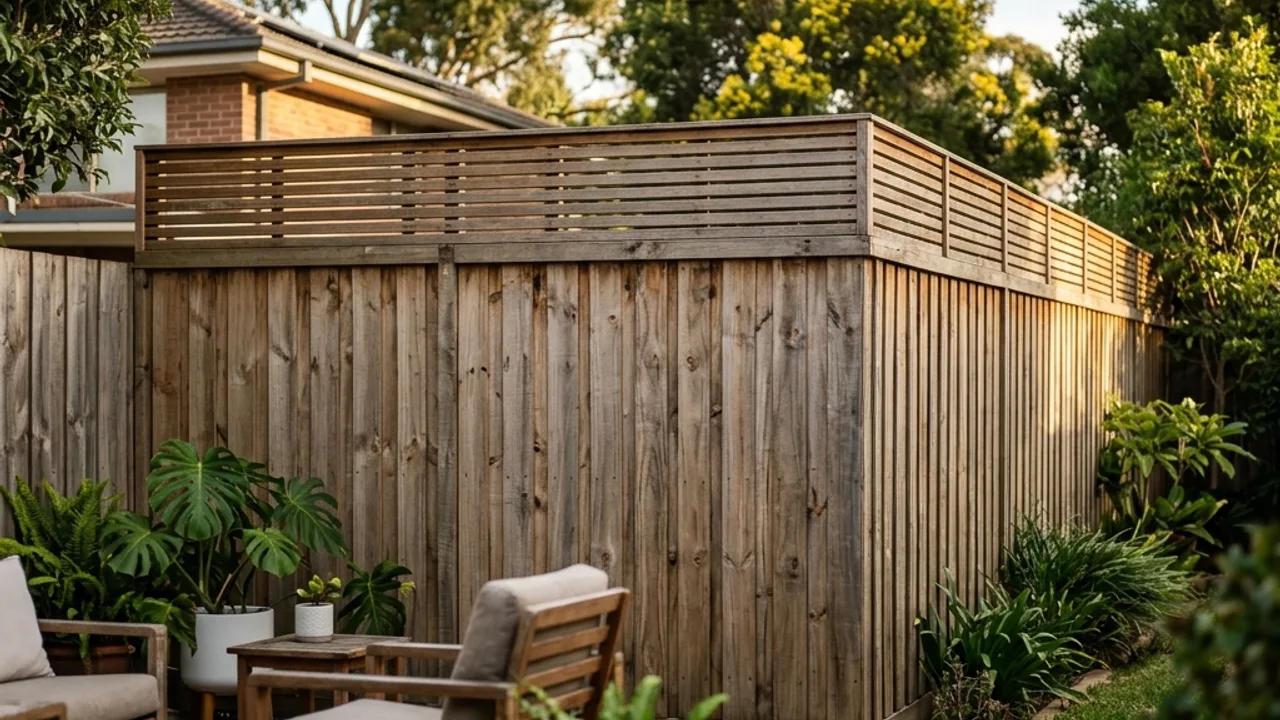
Start from the sightline, not the material. Work out what a fence can block, how high you may go, and where a screen does the job a fence cannot.
A two-storey house has gone up next door and looks straight into the yard, the pool or the back deck. A courtyard is overlooked from a driveway. A neighbour's air conditioner or dog run sits a few metres from the bedroom window. Traffic noise carries off a main road. This is the least decided reader on the site: you know exactly what you want to stop and you have no idea which height or material stops it, and the answer is genuinely not obvious. So this page is organised around the outcome rather than a product, and it recommends across Colorbond, timber and freestanding screening depending on what the geometry allows. Send what you are trying to block, where you are standing when it bothers you, the run length and your suburb.
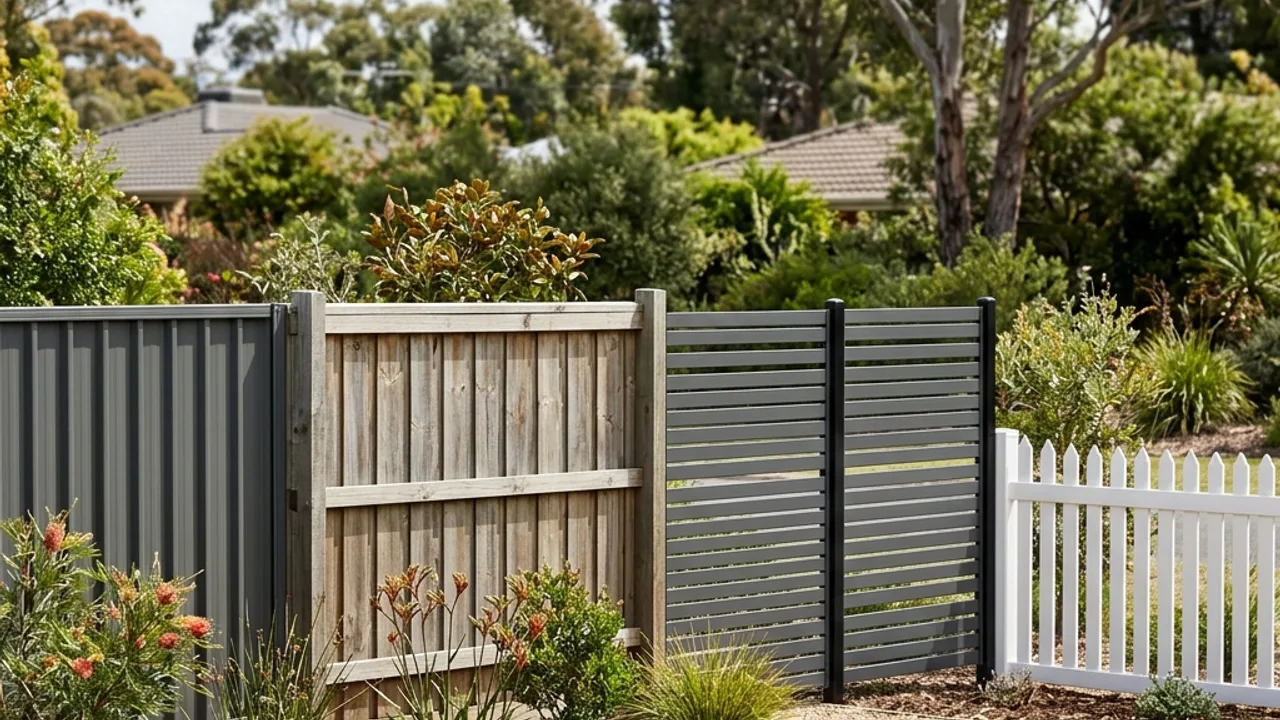
Solid runs with no gaps, in steel sheet or lapped and capped timber, which is palings overlapped with a capping board so nothing opens up as the timber dries.
Slat, lattice or sheet extensions added above a sound existing fence to gain height, provided the finished height stays within what is permitted on the block.
Freestanding screens beside a deck, a spa or a courtyard, which is the answer when the boundary fence has already reached its lawful height.
Which view, from where, at what eye height. That measurement drives every other decision, and taking it first is what stops people buying height they did not need or that will not work.
A solid fence with a plinth closing the ground gap performs better against both sightlines and road noise than the same fence with 100 mm of daylight under it.
A solid run at maximum height catches everything, and an escarpment-edge block catches more again. Post spacing and footings are set for the finished fence, not a standard one.
Height is where this goes wrong most often, because almost everyone in this situation wants more than 1.8 m. In Queensland a fence up to 2 m above natural ground is generally accepted development, and above 2 m it becomes building work needing approval from a building certifier. If the fence sits on top of a retaining wall, the two are assessed together, and once the combined height goes over 2.0 m above natural ground level you are into approval or siting discretion. That combination is common on the sloping blocks through Rangeville and Mount Lofty, where an uphill boundary fence frequently sits on a wall, so it is checked before anything is designed.
Where the boundary fence cannot lawfully go higher, screening takes over. A freestanding screen beside the deck or around a spa sits much closer to where you actually are, so it blocks far more of the offending view per square metre than a boundary fence ever could. It is usually the cheaper intervention too, because you are screening a seating area rather than a whole boundary.
There is one honest limit worth hearing early. A fence cannot solve a first-floor sightline. Somebody standing at an upstairs window looks over any lawful fence, because the geometry beats the height, and no amount of extra sheet will change that. If the problem is an upstairs window, the answer is screening over the outdoor area itself or planting, not a taller boundary. Readers who are not told this buy a 2 m fence and remain overlooked, which is the single most expensive mistake in this category.
For blocking a view, solid beats spaced every time and the material matters less than people expect. Colorbond sheet and lapped and capped timber both stop a sightline completely; the choice between them comes down to appearance, upkeep and how the fence relates to the house. What does not work is a spaced aluminium slat fence, which is a semi-privacy frontage product by design and will not screen a static view across a rear boundary. If a slat fence is what you had in mind for privacy, that is worth reconsidering before it is ordered.
Noise is the other request and it needs care. A solid, heavy fence with no gaps at the bottom or sides does reduce the road noise reaching a yard, and complete coverage matters more to that than which material the fence is made from. It is not soundproofing, and no decibel figure or acoustic performance claim is made here because none can be substantiated for your block, your traffic and your distance from the road. Expect an improvement in how the yard feels, not silence.
Then the cost-sharing point. Queensland's dividing fence law sets the shared standard at a sufficient fence of 0.5 m to 1.8 m in prescribed material, and privacy work usually goes beyond that in height or finish. The owner who wants more than sufficient pays the difference, so a neighbour may contribute toward the basic fence while the extra height or the topper sits with you. Knowing that split before you knock on their door makes the conversation shorter.
What you want to stop being seen, where you are standing or sitting when it bothers you, and whether the view comes from ground level or an upstairs window.
Eye heights taken from the actual positions that matter, existing fence height measured, and any retaining wall assessed because it counts toward the combined height.
Usually two or three approaches priced against each other: a full-height run, a topper on the existing fence, or a screen closer to the area you are protecting.
Posts and footings specified for a solid run at full height on that block's wind exposure, and screens fixed independently of the boundary fence.
Eye height from the position that actually bothers you, not a guess from the fence line. It is a short exercise that regularly changes the recommendation, and it saves people from buying a taller fence that would not have worked.
An upstairs window beats any lawful fence, and a spaced slat fence does not screen a static view. Hearing that before you commit is worth more than being sold the tallest option available, and it is the reason this page exists.
The 2 m threshold, the combined height where a fence sits on a retaining wall, and corner sight lines are all confirmed against your block at the measure, so the design that gets quoted is one you can actually build.
Up to 2 m above natural ground is generally fine without building approval. Above that you need a certifier. Where the fence sits on a retaining wall, the wall and fence are assessed as one combined height, and more than 2.0 m combined above natural ground level brings approval or siting discretion into play.
No, and anyone who says otherwise is selling you a fence. Someone at a first-floor window looks over any lawful boundary fence. Screening over the deck or the outdoor area, positioned close to where you sit, is the option that genuinely helps.
A solid fence with no gaps at the bottom or the sides reduces what reaches the yard, and coverage matters more than material. It is not soundproofing, and no figure is claimed here because none can be verified for your street and setback.
Their obligation runs to a sufficient dividing fence of 0.5 m to 1.8 m. Height beyond that is at the cost of the owner who wants it, so plan on covering the upgrade and get the split agreed in writing.
Questions Toowoomba homeowners bring to this job, answered plainly.
Pick your suburb for the local block, soil and access notes, or send the form and we will come back with a written quote for privacy fencing & screening.
Talk to a Toowoomba fencing specialist
Overlooked in your own back yard?
Tell us what you are trying to block and where you stand when it bothers you. You get a sightline check on site and two or three costed options.